Cameras to catch you blocking a bike lane? Absolutely. Technology that tells cops where somebody is shooting? Apparently that’s different
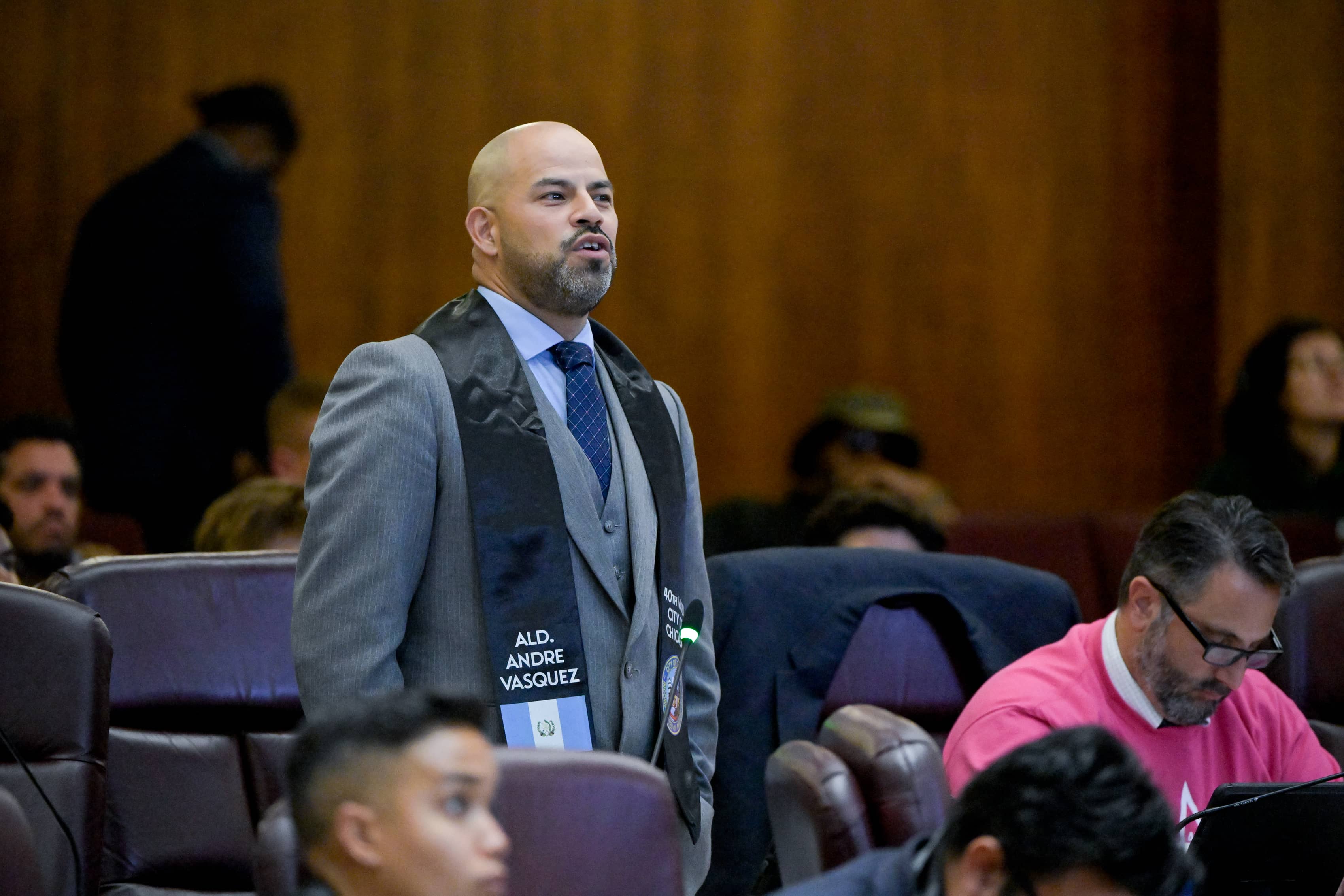
40th Ward Chicago Alderman Andre Vasquez, the failed “battle” rapper formerly known as Prime, has an interesting position on surveillance technology. He is not against cameras watching you. He is not against technology recording your automobile. He is not even categorically opposed to license-plate readers. What he is against is ShotSpotter, the technology designed to tell police when and where somebody is firing a gun. That distinction deserves some attention.
Vasquez was among the original sponsors of Chicago’s Smart Streets pilot. The ordinance authorized automated cameras mounted on CTA buses, city vehicles, and fixed infrastructure to photograph vehicles illegally blocking bike lanes, bus lanes, bus stops, crosswalks, and other restricted areas. Human reviewers verify the images, and motorists can ultimately receive tickets in the mail. Think the beloved red light cameras for bike lanes.
But apparently gunfire is another matter. When Chicago was debating whether to retain ShotSpotter in September 2024, Vasquez lined up against the technology. ShotSpotter used acoustic sensors to detect sounds identified as probable gunfire and rapidly notify police of their approximate location. Mayor Brandon Johnson had promised during his campaign to eliminate it, and when the City Council voted 33-14 to give Police Superintendent Larry Snelling authority to negotiate a new contract, Vasquez opposed the effort.
Vasquez didn’t mince words. “I think SoundThinking is a shoddy business,” he said of ShotSpotter’s parent company. He argued that the system had been sold to Chicago on promises of reducing violence and increasing convictions and that it had failed to deliver those results.
Of course it’s not surprising, but here’s the other side of the ledger. Chicago police released figures in 2024 showing that during nearly 30,000 ShotSpotter alerts from January through August, officers frequently found evidence of gunfire, including shell casings, and recovered 470 firearms. ShotSpotter could also alert police to gunfire before anybody called 911 — or in circumstances where nobody called at all. That last point is important. A parking violation generally produces a witness. A car blocking a bike lane sits right there in plain sight. Somebody can photograph it. A shooting can be very different. People hear gunfire and don’t necessarily call police. They may be frightened. They may not know precisely where the shots originated. They may assume somebody else has called. In neighborhoods where relations between residents and police are poor, witnesses may be particularly reluctant to become involved. A machine doesn’t get intimidated. A sensor doesn’t worry about retaliation. It doesn’t decide that somebody else will probably make the call. It hears what it identifies as gunfire and alerts police.
Shortly before Chicago shut ShotSpotter down, one particularly disturbing incident demonstrated that potential benefit. Four people, including a 13-year-old girl, were shot at a Back of the Yards dance studio. According to police-radio timing reported by CWBChicago, the ShotSpotter alert gave officers roughly a two-minute head start over the subsequent dispatch reporting people shot.
ShotSpotter also saved the lives of the wounded in the war zone that Chicago has become. CWB keeps a running death toll of victims who bled out because nobody heard ‘nuthin or bothered to call 911. The body count is rapidly approaching 100. Does Prime care? No. Maybe he figures dead people don’t vote. Maybe his gangbanger homies wouldn’t like it if he said something.
If ShotSpotter’s purpose includes getting police and paramedics to shooting victims sooner, then evaluating it solely according to arrests, prosecutions or convictions can miss part of the point. And Vasquez himself effectively conceded the dilemma. During the final City Council battle, while arguing against ShotSpotter, he acknowledged the concern of Chicagoans who wanted police equipped with every reasonable tool available. “Just removing it and not having any answer at all is frightening,” Vasquez said. Exactly. So what was the answer? Chicago turned ShotSpotter off. At 12:01 a.m. on September 23, 2024, police stopped receiving its gunfire alerts. The Johnson administration announced that it would look for alternative technology.
Now compare that attitude toward gunfire detection with Vasquez’s enthusiasm for Smart Streets. If an automobile blocks a bicycle lane, automated technology is an innovative public-safety solution. Put cameras on buses. Put cameras on city vehicles. Put cameras on poles. Record the violation. Review the evidence. Identify the vehicle. Send the owner a ticket. Vasquez has expressed interest in seeing Smart Streets expanded if it proves effective. But when the subject was technology automatically detecting possible gunfire in some of Chicago’s most violent police districts, suddenly the burden of proof became considerably more demanding.
Chicagoans deserve an answer to this question: Which violation worries us more? Sending police to investigate a loud noise that turns out not to be gunfire, or failing to send police to actual gunfire because nobody called 911? You can be sure they won’t get one from Vasquez. Not even in rhyme. He's too busy pandering to the bike lobby nuts who want to ban cars and turn the city into what China was back in the '70s when they couldn't afford combustion engines, or an Amish village, to put the last nail in Chicago’s coffin. Only Democratic Socialists like Vasquez would be able to ride around like Chinese Communist billionaire boys, mowing us peasants down with impunity as we beg them to fill our rice bowls with their leftovers.
There are costs on both sides. And there is something revealing about Chicago’s political priorities when City Hall can summon enormous enthusiasm for increasingly sophisticated automated enforcement of traffic regulations while engaging in a prolonged ideological war over technology intended to detect people firing guns. I happen to think bicycles belong in bike lanes and bullets don’t belong in human beings. Apparently that makes me old-fashioned. Oh, and by the way, whenever they say it's not about the money, it's about the money. You don't hear Vasquez lamenting red light cameras, after all, even though they have an adverse impact tribewise just like ShotSpotter, right? Maybe if it fined shooters so he could hire his homies as “violence interrupters” he would support it.
The proper public-policy question isn’t whether ShotSpotter was perfect. Almost no technology is. The question is whether its benefits — faster notification of gunfire, locating shootings that otherwise might not be reported, finding victims sooner, recovering evidence and occasionally recovering firearms — were worth its costs and shortcomings, or whether Chicago had something demonstrably better ready to replace it. Vasquez himself had no answer after saying removing it was frightening. Then Chicago removed it anyway.
Don’t tell Chicagoans that automated surveillance is a wonderful public-safety innovation when the machine is protecting a bicycle lane and somehow becomes objectionable when the machine is listening for gunfire. Vasquez isn’t against surveillance when it puts money for patronage jobs in his pocket. His own record makes that clear. The more interesting question is what he believes surveillance should be used to protect — and why. Because in Chicago, where people continue to be shot and killed, residents have every right to ask City Hall whether detecting a gunshot deserves at least as much technological ingenuity as detecting a Buick sitting in a bike lane.
