Chicago could use a few more billionaires and perhaps a trillionaire
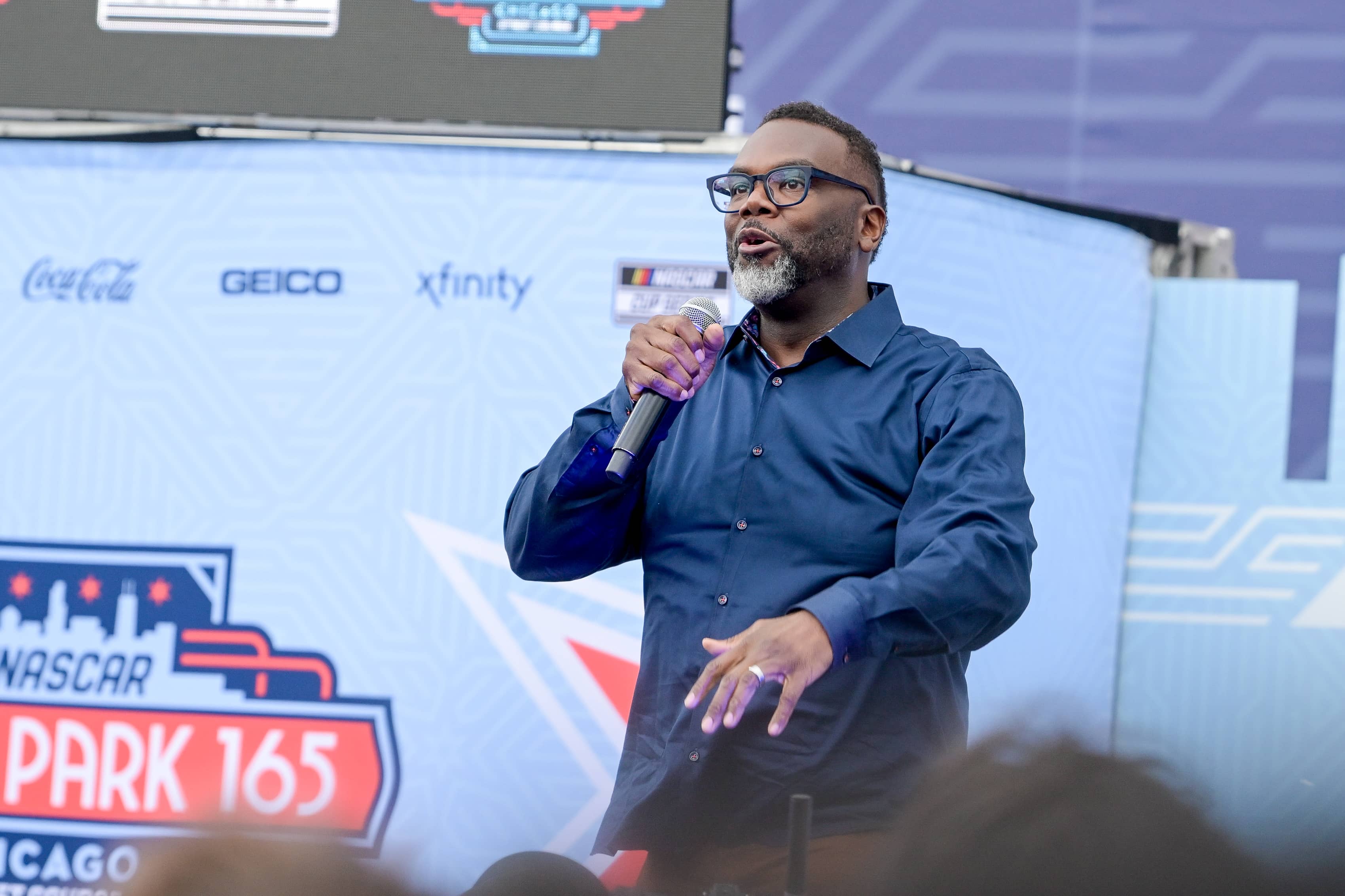
Mayor Brandon Johnson’s career in public office has been built on bizarre rants and imprudent public statements. Since he became a Cook County Commissioner in 2018, Johnson has excused the looting of Michigan Avenue retail stores as the attempt at human survival, shrugged off pure teen criminality as “silly decisions,” and passionately denounced “jails, incarceration, and law enforcement” a sickness.
In other instances, Johnson has — ahistorically — sought to link the alleged productivity of slavery to the triumph of capitalism in America. A third-rate attempt to yoke the stain of slavery to every malady of contemporary American life, in his latest human combustion moment, the mayor lamented Elon Musk becoming the world’s first trillionaire.
In a post on X, Johnson wrote: “This is not a sign of prosperity. It's an indictment of a broken economy and a broken tax code.”
.png)
The mayor’s tantrum, on its own, comports with his usual pattern of blaming the wealthy for societal ills, but Johnson, of course, has this backwards. Musk’s success, and his vast personal wealth is neither a result of a broken economy nor a broken tax code. Moreover, though Johnson did not directly state billionaires and trillionaires should “not exist” as New York Mayor Zoran Mamdani did late last year, the City of Chicago should want more billionaires and trillionaires, not fewer, and certainly not none.
Though Johnson offered little to support why he believes Musk’s burgeoning wealth is problematic, the implication was clear: Behind Musk’s great fortune lies a great crime.
Johnson seems to think the economy is a zero-sum game, where if one amasses substantial personal wealth, the masses suffer and are consigned to a lifetime of living in miserable conditions. Johnson’s position — one designed to be provocative — is deeply misguided. Contrary to the mayor’s stance, what Johnson does not understand is while amassing their fortunes, billionaires and trillionaires make the rest of us more prosperous, not poorer.
When Elon Musk became the world’s first ever trillionaire on June 12, the $75 billion initial public offering (IPO) created millionaires of 4,400 Musk employees who were SpaceX shareholders. SpaceX’s initial offering also allowed another 400 Musk employees to witness their personal worth jump into the $100 million category.
Musk is not alone in his industry. Take, for example, Amazon’s Jeff Bezos. Like Musk, Bezos has made society wealthier. A man whose net worth is estimated at $255 billion, Bezos is another innovator whose business dynamism has created nearly $11 trillion in wealth for others. Through Amazon, Bezos has lowered prices for consumers, which strengthens the purchasing power of millions of consumers who engage in e-commerce. By granting consumers wider access to a broad range of consumer goods, our lives improve by spending less time traveling to retail stores and therefore have more time to devote to work and pursue leisure.
Comparable to Musk and Bezos, other entrepreneurs such as Bill Gates, Michael Dell, and Larry Ellison — all billionaires — have also brought about positive-sum contributions which serve consumers’ interests. Through their assiduity in the technology sector, Gates, Dell, and Ellison have increased productivity for millions of workers by developing high-quality software and processing devices, which drives up employee wages. Equivalently, Larry Page and Sergey Brin pioneered e-mail, internet software for search engines, and web mapping. The services provided by Page and Brin through Google, Mayor Johnson conviently forgets, are free of cost to users.
Part of a debate over whether “the system” — democratic capitalism — or the tax code is fundamentally broken, Johnson fails to recognize one of the central moral promises of democratic capitalism is individuals deserve recompense for their vision, penetrating discernment, and industriousness. Also lost on Johnson is the fact economic inequality is a fundamental verity and permissible in a society in which capitalism flourishes if differences in effort, risk taking, skill, and choices are all taken into consideration.
The available evidence allows us to reach the conclusion capitalism’s promise — a reward of remuneration — is being kept and the generous financial return is entirely determined by productivity.
Johnson’s message is not new. Previously, the mayor has railed at wealth concentrated in the hands of a few and has mechanically issued calls for laying a “millionaires tax” and increasing corporate taxes. A man who thinks only in terms of oppressor and oppressed, Johnson fails to grasp the secret of capitalism is free entry into the marketplace, of which we all enjoy. In theory, in a capitalist economy, if one devises an idea for a good or service which could be profitable, one need to produce it and take it to the market. If your idea is desired by consumers in the marketplace, wealth is created for many. If the product is unwanted, a loss is incurred. The problem here, of course, is Mayor Johnson is fixated on the faults of a capitalist system and believes the powerful, wealthy, and successful benefit through careful exploitation of the weak or poor. To Johnson, capitalism is mean spirited, conscienceless and leads to economic decline, exploitation of the masses, and personal degradation.
A morally offensive and empirically insane progressive construct, billionaires have outsized wealth because they make outsized contributions to society. Elon Musk’s income wasn’t “distributed” to him. Musk earned his wealth. Rather than scold and shame billionaires, Mayor Johnson should be applauding the wealthy, recognizing their contributions, and encouraging their success.
Elon Musk is one of the most consequential humans to live. The co-founder of PayPal, Tesla, SpaceX, StarLink, and Neuralink, Musk did not merely start up separate companies, he created three separate industries. Through Musk’s wages, procurements and taxes, it is estimated he has delivered in excess of $300 billion into the U.S. economy, created nearly 200,000 jobs globally, improved our living standard, and, yes, paid billions in taxes.
Mayor Johnson is mistaken to suggest Elon Musk’s wealth is a symbol of a broken economy and a broken tax system. Musk, along with other billionaires, does not deserve to be treated as either a villain or cog in a machine designed to generate revenue for society. The mayor is best served to be reminded progressive labor organizers who achieve political office are often frustrated when their ideology collides with reality.
If Johnson had good sense, he would be creating policies which encourage billionaires to relocate to Chicago.
