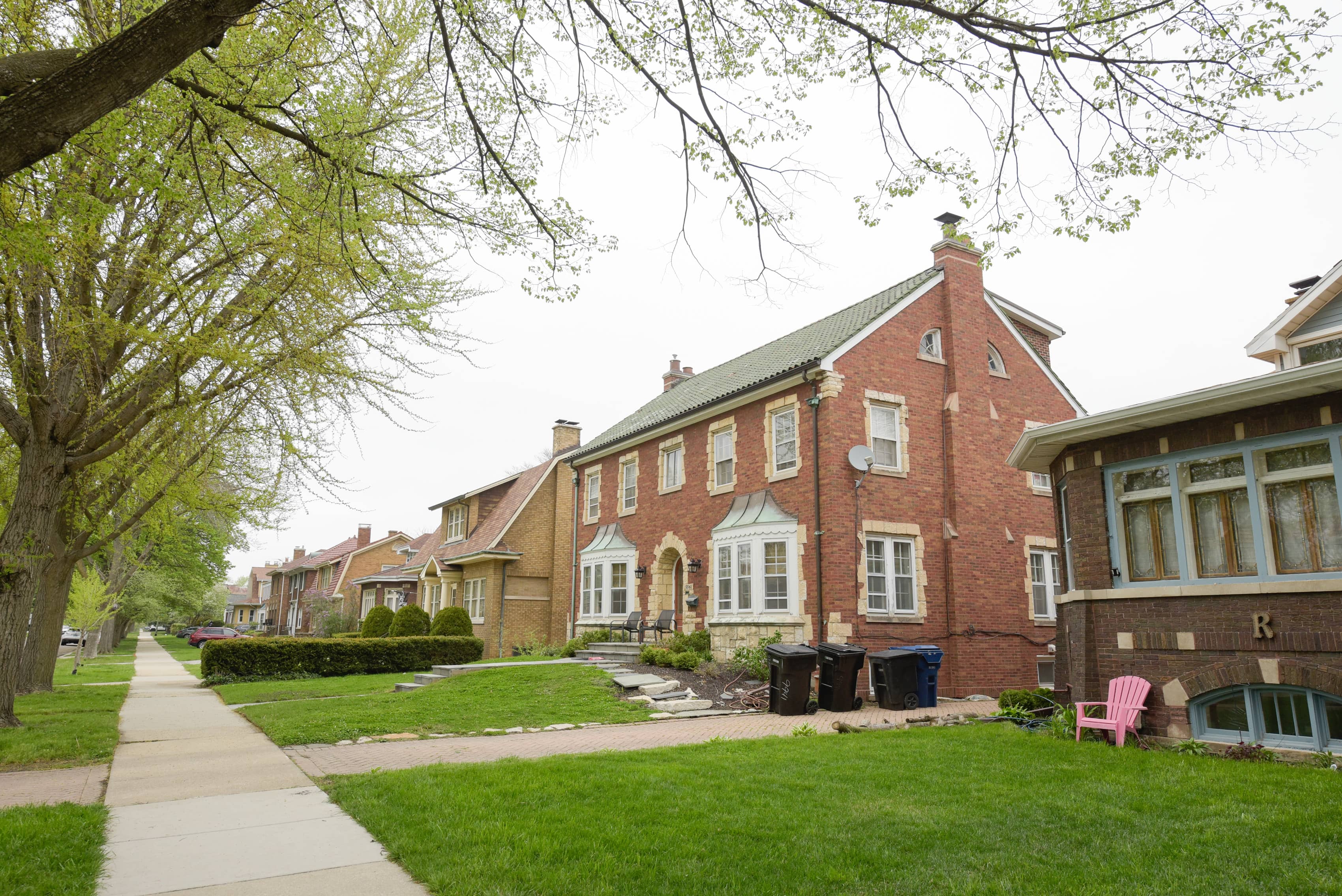
Chicago residents should prepare for the worst
Chicago residents, particularly homeowners, need to brace themselves for another major wave of property tax hikes in 2027. Despite Mayor Brandon Johnson’s repeated assertions that he has “held the line” on property taxes, the reality tells an entirely different story. Passing almost unnoticed, the mayor-appointed Chicago Board of Education has approved a budget that relies on a $300 million property tax increase and at least $285 million in diverted Tax Increment Financing (TIF) revenues.
Chicago property taxes are soaring
This year, Chicago residential property owners saw their tax bills jump by $470 million — representing more than half of the $872 million overall property tax increase levied across Cook County. According to an analysis by the Illinois Policy Institute, Cook County residential property tax bills have surged 78 percent since 2007, outpacing home value growth by more than 10 times and forcing homeowners to pay an average of $2,558 more per year while property values stagnated.
A joint investigation by Illinois Answers Project and the Chicago Tribune illustrated the devastating impact on Chicago’s lower-income neighborhoods, where assessments doubled or even tripled for more than 37,000 homes on the South and West Sides. In Englewood, Roseland, and North Lawndale, median assessments leaped between 119 percent and 160 percent, dwarfing the 22 percent citywide median.
Systemic tax debt issues have compounded the problem. Since 2019, more than 1,000 Cook County homeowners have lost their properties — and equity — to tax sales, with tens of thousands more faced with delinquent tax lists where over half the debts were under $1,000. Following the U.S. Supreme Court’s landmark Hennepin County ruling declaring equity forfeiture unconstitutional, lawmakers were forced to overhaul Illinois’ tax sale laws to end this confiscatory practice.
CPS’ insatiable tax appetite
The Board of Education controlled by Mayor Johnson has tapped property taxpayers for $725 million in new tax increases. During Johnson’s first term, the city will have directed over $1 billion in property tax revenue from TIF districts into the school system with the new CPS budget. CPS officials justify this continuous tax pressure by claiming the state shortchanges the district by $1.6 billion under the Evidence-Based Funding formula.
Yet the financial record shows otherwise. Since Governor J.B. Pritzker took office, state funding for Illinois public schools has increased by $4 billion, with CPS receiving $746 million of that bump — a 34 percent increase in state support — even as enrollment dropped by 11 percent. During the same period, federal COVID relief provided $2.8 billion directly to CPS. On a per-pupil basis, CPS funding has risen by over 44 percent since 2019.
The illusion of tax caps and TIF distortions
While Illinois maintains property tax extension limits, these "caps" are riddled with loopholes. They do not apply to home-rule units like Chicago or Cook County. They do not protect properties that undergo reassessment or improvements. They allow school districts to recover revenues lost to tax appeals. Penalties and late fees remain outside the cap. Most importantly, caps offer no protection against tax rate hikes driven by TIF diversions.
TIF districts now siphon nearly $2 billion annually out of the general tax base, driving effective tax rates higher for everyone else. When property taxes are diverted by TIF’s, local governments do not lose revenue as tax rates are adjusted higher to meet tax levy requests, effectively raising property taxes. CPS alone has drawn $1.9 billion in TIF property tax windfalls since 2019, on top of its 54 percent baseline share of standard property tax collections.
Gimmicks over real relief
Rather than offering structural tax relief, Cook County officials have relied on short-term fixes. Last year, the county launched the Cook County Homeowner Relief Fund — a one-time, $15 million cash assistance program offering $1,000 payments to lower- and middle-income households facing severe tax spikes. It was a putrid response to the dramatic increases in property taxes impacting South and Westside residents.
Despite the county collecting a record of well over $100 million annually in late payment property tax payment penalties, it allocated only only $15 million to the program. Only an estimated 13,600 of the 1.2 million Cook County homeowners and none of the almost 900,000 renters would benefit from this inconsequential program. A far fairer and more impactful approach would have been rebating all late-penalty windfalls directly back to taxpayers.
A broken billing system
Cook County’s property tax infrastructure remains severely compromised as the ongoing "Tyler scandal" — a decade-long failure involving software vendor Tyler Technologies continues. Originally budgeted at $65 million to modernize outdated property tax and court systems, the project’s costs have ballooned past $267 million, including $75 million spent just to patch up legacy systems. The result: Delayed tax bills, administrative chaos, and millions of dollars in interest costs for local taxing bodies forced to borrow while waiting for distributions.
Remember that Cook County Board President Toni Preckwinkle claimed the system was fixed explicitly stating in a March interview before her Democratic primary that the county had the new build-out and property tax bills would be "on time going forward." She deliberately lied as the system's issues not only persisted, but worsened. Months later in June, Preckwinkle announced the next round of property tax bills would again be delayed approximately two months and reopened a $300 million loan program to help local governments cope with the resulting cash-flow shortage
An appeals system that favors the connected
The property tax appeals system continues to shift burdens onto those least able to pay. A Treasurer’s Office report revealed commercial tax appeal reductions shifted roughly $1.9 billion in tax burden onto residential homeowners between 2021 and 2023. In the higher-income communities, nearly 46 percent of all property owners file tax appeals; in lower-income areas, only 11 percent do. The system is further compromised by deep political conflicts of interest.
For decades, powerful lawmakers have operated lucrative law firms specializing in property tax appeals. State Senator Bob Martwick, who serves as a leader in the Cook County Democratic Party Co-Chair continues to practice before the Cook County Board of Review while maintaining significant influence over judicial and party appointments. Preckwinkle has placed Martwick on every committee she created, including the committees that select judges from the Circuit Court to the Illinois Supreme Court.
Martwick has consistently opposed fundamental reforms to an appeals system that forces businesses and homeowners into endless, costly annual appeals. In this role, Martwick has extensive influence over the selection of Board of Review Commissioners and judges his law firm comes before. Martwick has consistently opposed fundamental reforms to an appeals system that forces businesses and homeowners into endless, costly annual appeals.
What real property tax reform looks like
Cook County’s property tax system functions as a self-serving revenue engine for government expansion. Temporary income subsidies and PR-driven relief funds do not address the core crisis. While containing the cost of government is critical, including the city’s long term pension obligations which Governor Pritzker was only to eager to add to over $11 billion to with his pension sweetener, there are structural changes that can be made to protect homeowners and businesses.
1. Cap individual parcel tax growth: Cap property tax bill increases on individual residential and commercial parcels at five percent annually for unimproved properties. This would shield homeowners from unpredictable assessment spikes, combat gentrification pressures, protect renters from pass-through rent shocks, and give small businesses predictable operating costs.
2. Restrict TIF expansion and duration: provide for full transparency on the use of TIF funds while enforcing a strict statutory lifespans for TIF districts, limiting extensions, and returning surplus TIF dollars to the general tax base to lower overall tax rates.
3. Overhaul the appeals process: Level the playing field for working-class families who cannot afford specialized legal representation, and eliminate conflicts of interest that allow sitting legislators to profit from tax-appeal practices.
Without property tax caps on individual property, real TIF reform, and bringing fairness and providing access to the appeals, Chicago homeowners will continue to shoulder an ever increasing and unsustainable tax burden.
