The Truth About License Plate Reader Cameras — And the Misinformation Campaign Against Them
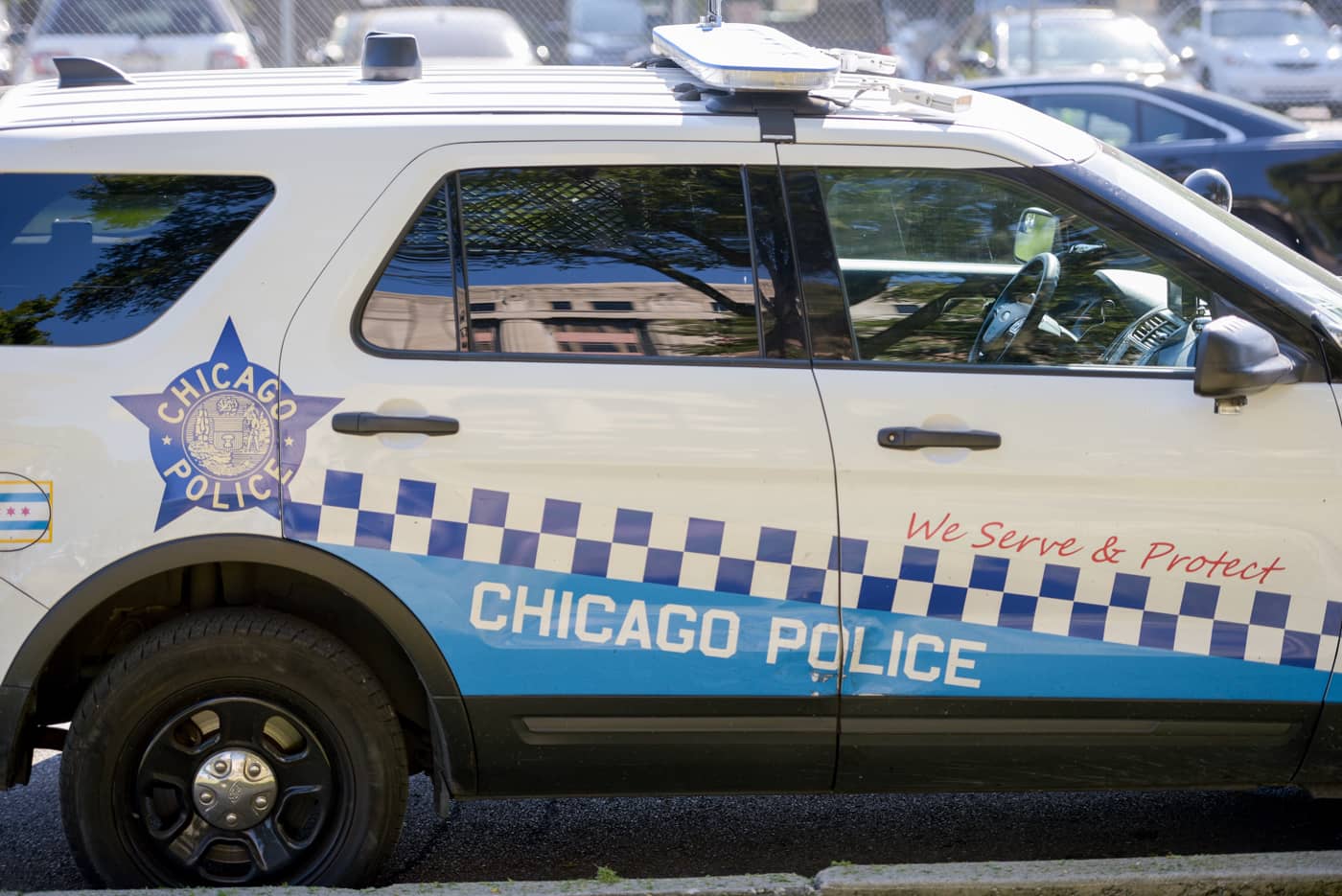
License plate reader cameras are an indispensable tool for police
For 30 years, I wore a badge. Recently, I have observed a coordinated, well-funded misinformation campaign aimed at convincing Americans that automated license plate reader (ALPR) cameras, or "Flock cameras," constitute illegal surveillance. They are not. It is time for someone with real law enforcement experience to state this clearly.
Let us begin with the facts and the law.
ALPR cameras are legal. That is not spin; it is the consistent finding of federal and state courts that have examined the facts. The Fifth Circuit, the Washington Court of Appeals, the Massachusetts Supreme Judicial Court in Commonwealth v. McCarthy, the Ninth Circuit in United States v. Yang, and, most recently, a federal district court in Schmidt v. City of Norfolk have all upheld fixed-location ALPR programs. The legal reasoning is straightforward: A license plate displayed on a public road is, by definition, in plain view. There is no reasonable expectation of privacy in something you are legally required to display to everyone driving behind you.
I will be honest with you on one point: I do not need to exaggerate to make this case. The U.S. Supreme Court has not yet directly ruled on ALPR cameras. Activist groups know this, and they are trying to use a different Supreme Court case, Chatrie v. United States, a 2026 ruling about cellphone geofence location data, to argue that ALPR programs are suddenly on shaky ground. They are stretching a phone-tracking case to cover a technology that photographs license plates in public places.
Every court that has actually heard an ALPR case under these facts has ruled the same way I have seen play out for years on the street: this is lawful, conventional police work with a camera instead of an officer's eyes.
The results speak for themselves.
I have dedicated my career to observing what works. ALPRs are effective.
- In Idaho Falls, 13 ALPR cameras resulted in 56 arrests over five months.
- During a four-month pilot in Wichita, Kansas, license plate readers helped make 156 arrests, most of them felonies, and recovered 23 firearms and 152 stolen vehicles.
- Los Angeles County Sheriff Robert Luna credited ALPR technology with helping catch a suspect believed to be responsible for four murders, a suspect who, without that camera hit, "may have been out there and re-offended."
- Flock Safety's 2025 nationwide survey of nearly 700 agencies across 43 states found that the technology helped solve about 20 percent of cleared cases in the jurisdictions that use it. This amounts to an estimated 700,000-plus crimes supported or solved annually, and more than 10,000 missing persons located.
- After the Brown University shooting, investigators used camera footage to track down the suspect even after he exchanged his license plate.
As I told the Chicago Sun-Times when Illinois lawmakers tried to weaken ALPR programs with new restrictions: fewer crimes would be solved without them. I know municipalities that closed sexual assault cases using license plate readers that might have remained unsolved, perhaps forever. Hit-and-runs, the kind that leave a family with no answers, get solved because a camera caught a plate that a witness never could.
Kidnapping. Carjacking. Child endangerment. Armed robbery. DUI. Hit-and-run fatalities. These are not just hypothetical categories; they are real cases with real victims that get closed because a camera can do in one second what might otherwise take detectives days or weeks, if they ever get there at all.
This was never truly about cameras.
Here is what I have realized after three decades in this field: Most of the loudest critics of ALPR technology are not genuinely concerned about license plates. They are anti-police, and the camera is just their current target. If it were not for ALPRs, it would be body cameras, K-9 units, plainclothes officers, or bail policies. The technology serves as a stand-in for broader hostility toward policing, and it gets dressed up as a privacy concern because "we don't like cops" doesn't win City Council votes.
Ask yourself: When was the last time you heard an activist group celebrate a kidnapped child being recovered because of a camera hit? You have not. Because the goal was never public safety, it was to strip law enforcement of a tool that works.
Misuse is serious and can destroy careers, but it should not stop the technology.
I will not pretend this technology is perfect because no technology is, and no honest cop would tell you otherwise. There are documented cases of officers misusing the camera database to search for plates to track an ex-partner, pursue a personal grudge, or target a colleague. These cases are inexcusable. When they occur, the officer responsible should be fired immediately and prosecuted like any other citizen who abuses access to a government system. That is accountability, and it is exactly how it should work.
But here is the distinction activists refuse to make: The ‘existence’ of misuse by a small number of bad actors is not an indictment of the tool. It is an indictment of the individual who broke the rules. We do not ban patrol cars because some officers have driven drunk in them. We do not ban firearms from being issued to police because a handful have misused them. We hold the individual accountable, and we keep the tool that, overwhelmingly, does exactly what it was built to do: help good cops solve real crimes.
The bottom line
License plate reader cameras are legal, effective, and saving lives — helping recover victims of kidnapping, trafficking, sexual assault, and violent crime when a plate matches a hot list in real-time. Those trying to convince you otherwise are not debating the technology in good faith. They are rehashing their opposition to policing, using "flat cameras" as a current vehicle for that argument.
Statement Directed to Offenders:
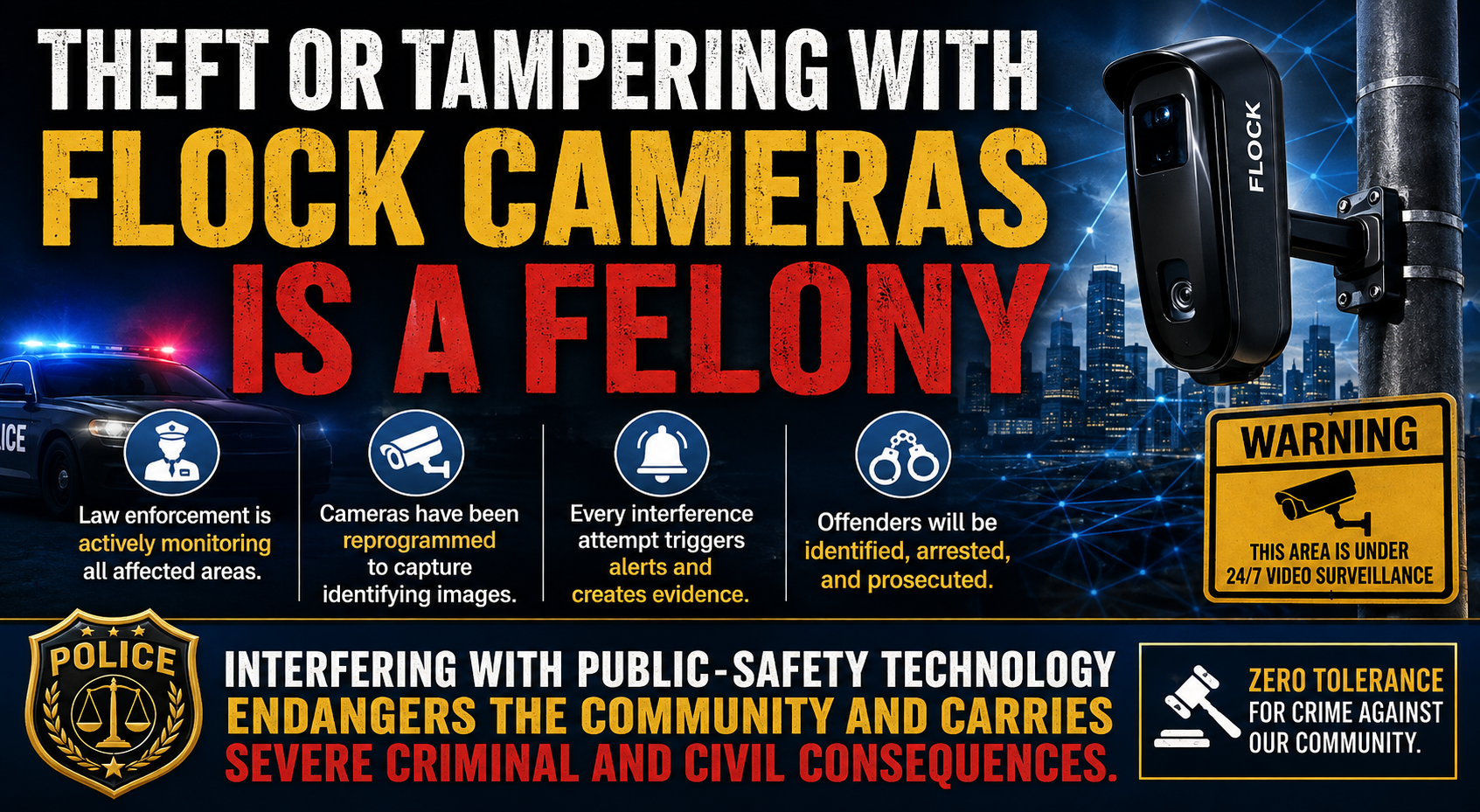
To those responsible for stealing or tampering with Flock safety cameras: Understand exactly what you have done. You didn’t pull off a stunt, you didn’t “beat the system,” and you didn’t disable police technology. You committed a felony. You interfered with critical public-safety infrastructure, and you put an entire community at risk.
Law enforcement has already identified your activity pattern. Officers are actively monitoring the area, conducting targeted surveillance, and deploying additional resources. The cameras you tried to steal or disable have been reprogrammed and repositioned. They will capture your face, vehicle, movements, and associates. You cannot outrun the technology, nor can you outrun the investigation.
You will be arrested, charged, and prosecuted.
If you think you can interfere with police operations without facing consequences, you're mistaken. Every action leaves evidence. Every attempt to tamper with these systems triggers alerts. Each camera you touch becomes part of a criminal case file.
Your conduct is a crime. Your identity will be revealed. And you will be held accountable.
I have supported this technology as a police chief, and I continue to support it now.
Tom Weitzel is a Fellow of Law Enforcement at Awake Illinois and retired from the Riverside, Illinois, Police Department in May 2021 after 37 years in law enforcement, including 13 years as Chief of Police.
The opinions expressed are his own. You can follow Chief Weitzel followed on X at @chiefweitzel.
