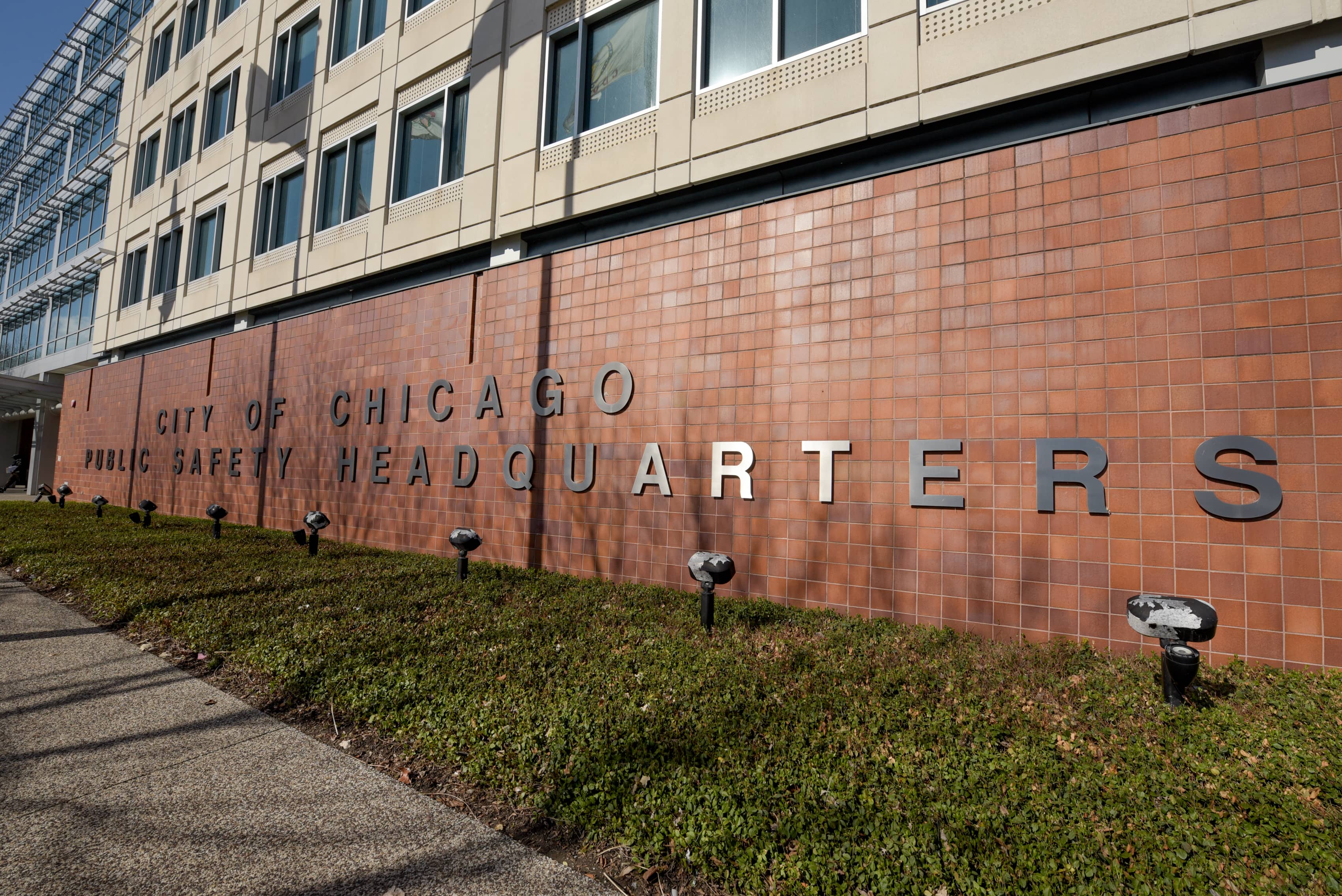
There is no room for error in choosing the next leader of the Chicago Police Department
The retirement of Superintendent of Police Larry Snelling on July 15 was hardly surprising. In the months prior to Snelling closing out his 34-year career with the Chicago Police Department (CPD), gusts of rumors over his expected exit wended their way down the corridors of 35th and Michigan Avenue. As rumors swirled, most of which went unrebutted by Snelling, some political observers predicted the former superintendent would take the opportunity of his May 20 appearance at City Club to reveal his professional intentions. Snelling, however, defied the prognosticators and tendered his resignation one month later.
With Snelling now retired to the sidelines, the city is now in search for its next leader of CPD. The ability to appoint a police superintendent is one of the most crucial responsibilities of the mayor, and one of which there is minimal room for error. With Chicago now seeking its sixth superintendent since 2008, the burning question for Mayor Brandon Johnson and the Community Commission for Public Safety and Accountability (CCPSA) charged with reviewing candidates to lead CPD is what qualifications are mandatory in the next superintendent.
Paramount among the requirements for the next leader of CPD is the candidate must be an experienced Chicago Police Department veteran. Though there may be external applicants with impeccable credentials, an internal hire will avoid a repeat of Jody Weis’ disastrous appointment in 2008. An outsider and former FBI official who had never run an organization of substantial size, Weis did not understand the machinery of CPD and lacked familiarity with CPD personnel.
Though given a mandate from Mayor Richard M. Daley to clean the stables following the Anthony Abbate incident, Weis was unable to assimilate into a leadership role over a sprawling, urban police department and his overhaul of CPD led to a raft of demotions, reassignments, and forced retirements which proved catastrophic for the Department. Aggravating matters, Weis then snubbed accomplished, internal candidates for promotion, preferring to name personnel associated with federal law enforcement for senior positions in the Department.
Weis’ resignation in 2011 saw the return of former Superintendent Terry Hillard, who in five months brought stability to CPD, but Hilliard was followed by another outsider, Garry McCarthy. While McCarthy clutched a Mandarin-class resume in urban center policing and could navigate high-stakes politics, out-of-state events, the rise of the anti-police movement, and Rahm Emanuel’s machinations eventually forced him out in 2016.
Following the departure of Eddie Johnson in 2019, in a monumentally idiotic decision, then-Mayor Lori Lightfoot imported former Dallas Police Chief David Brown. A disaster created by the serial blundering ex-mayor, Brown sought media celebritydom rather than the responsibilities of the office. Fond of giving interviews, Brown basked in the superficial celebrity clout conferred upon him by Chicago’s adoring media. A man derelict in his duty, Brown’s tenure was marked by missteps, misjudgments, and self-evidently awful decisions.
In one appalling incident, Brown shrugged and continued to dine at an exclusive River North steakhouse with Chicago’s privileged elite and directed subordinates to carry our crisis management following the suicide of a police officer. Worse, while serving as superintendent, Brown acquired the sobriquet “Outta Town Brown” for his routine of commuting between Chicago and his hometown of Dallas on weekends.
Aside from the importance of hiring an internal candidate to lead CPD, the mayor and CCPSA entrusted with the selection process are best serving Chicago by considering an applicant with broad experience and demonstrable administrative capabilities. Although competence may not run like a seam through CPD’s exempt ranks, there are undoubtedly a sufficient number of intellectually nimble, talented, and politically savvy exempt members with the experience and organizational and managerial skills to capably administer over the Department.
Chief among the essential qualifications is an applicant who has served a majority of their career in the Bureau of Patrol. The largest division of CPD, Patrol is often considered the pillar of a police department and the division which manages the largest share of emergency calls, alarms, police radio, and nonemergency calls. These instances also include incidents officers initiate themselves. Though valuable field and administrative experience can be gained from service in a specialized unit or an assignment at Public Safety Headquarters, with a vast majority of crime incidents handled by Patrol, a candidate with substantial field and supervisory experience in Patrol is preferred.
Another key qualification for the next superintendent is the new hire must have deep knowledge and experience in managing, reviewing, and approving administrative paperwork, principally arrest and Tactical Response Reports (TRR). The mayor and CCPSA should also give serious consideration to applicants who have extensive experience working afternoons and midnights, preferably in Districts which experience higher levels of crime.
Though academic credentials and broad experience are requisites for any candidate, there is one personal and professional attribute on which the CCPSA and Mayor Johnson cannot compromise in the next Superintendent: The ability to lead.
The position of Superintendent of Police requires a special individual who is immersed in the police profession and committed to both CPD and residents of Chicago. A position which requires unremitting attention to the safety and security of residents, the next superintendent must be capable of making sacrifices in their personal lives to fulfill the obligations of the office. To flourish as superintendent, the candidate must be able to anticipate and solve complex problems, be reliable in moments of crisis, build a cohesive and effective exempt staff, communicate and interact effectively with immediate subordinates, and, above all, play an active and visible role in daily operations of CPD.
The nature and character of policing are inextricably linked to the nature and character of leadership. Being visible and engaging at the forefront are the two most critical competencies for effective leadership. Leadership is paramount to the success of any police department. Leaders not only make crucial decisions but directly control the climate and quality of life of their subordinates. Fundamentally, leadership is not about wielding power — it is exercising authority responsibly.
Above all, the next Superintendent of Police must be amply endowed with strength of character. Though a resume has a certain value, the next leader of CPD will be stepping into a boiling cauldron of politics and nepotism. The next superintendent must be a shrewd and resilient political operator who will neither flinch from the responsibilities before them nor pale before a difficult decision. The new superintendent will be charged with settling disputes, making personnel changes, and applying new policy. Decision making on these pivotal issues must be governed by public safety concerns, common sense, and reality -- not politics, personal relationships or maintaining harmony.
The residents of the City of Chicago are dependent upon the Chicago Police Department for their safety. While crime has dropped in the Windy City since the arrival of Eileen O’Neill Burke at the State’s Attorney’s office, Chicago is still contending with unreasonable crime rates. With crime conditions improving, now is not the time for the mayor or the CCPSA to use the search for a new superintendent as the opportunity for a progressive experiment. The stakes are simply too high.
Both the mayor and the CCPSA cannot genuflect in the direction of racial hucksters who demonize police nor can they afford to turn the hire of the new police leader into an exercise in political correctness. The search for the next Superintendent of the Chicago Police Department must be based on a candidate’s character, countenance, experience and achievements, and vision for public safety.
Chicago requires an agile and enlightened leader of its police department. To select a candidate outside these hiring guardrails would be a monumental disservice to residents.
