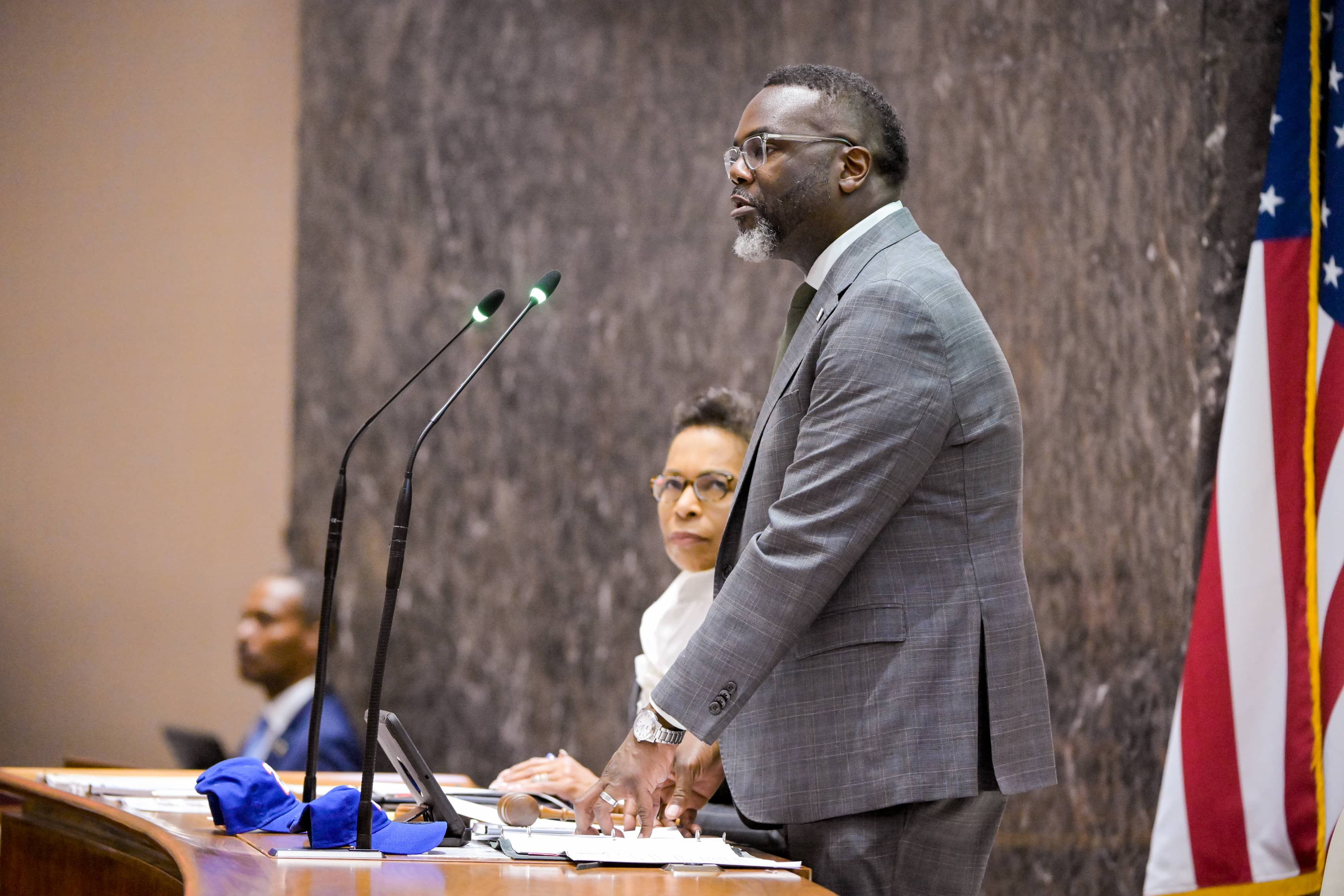
Odds are Mayor 6.6 is a one-term blunder
You can always tell when an animal is wounded. The vultures start circling — patiently, methodically — waiting for the inevitable.
And you can always tell when a political animal is wounded when a parade of ambitious office-holders, donors, consultants, and professional ego-inflaters suddenly decide it’s time to jump into the race to succeed him — years earlier than normal, and armed with serious financial firepower.
Which brings us to Mayor Six Percent.
In the dead of winter — during a polar vortex that has Chicagoans looking for anything to lift their spirits — nothing warms the contrarian soul quite like watching the political scavengers gather over the carcass of Brandon Johnson’s mayoralty. The Chicago Tribune’s latest reporting confirms what has been obvious for months: the mayor is badly wounded, and everyone in town knows it.
The line of would-be successors is already out the door.
A “very beatable” incumbent
According to the Tribune, Johnson is now widely regarded as “very beatable.” That phrase alone should set off alarm bells inside City Hall. Incumbents are not supposed to be described that way — especially not this early.
Even more telling are the numbers.
As of the end of 2025, Johnson had just $830,000 on hand. That might sound respectable until you realize he is being lapped by potential challengers who haven’t even formally declared:
- Alexi Giannoulias: a staggering $6.35 million
- Susana Mendoza: $1.6 million
- Six potential challengers raised more than Johnson last quarter — while Johnson scraped together just $70,000.
In Chicago politics, money isn’t everything — but a yawning gap like this is a flashing red sign that donors have moved on. Big donors don’t back losers. And right now, Brandon Johnson looks like political carrion.
U.S. Rep. Mike Quigley (D-IL) didn’t mince words:
“I think the public’s made up their mind about him. This is a city in crisis.”
That’s not Republican opposition talk. That’s a Democrat smelling blood in the water.
Denial, spin, and class warfare rhetoric
Johnson’s camp insists everything is fine — naturally. His political director claimed the mayor would be “more than competitive” if he decides to run again, while recycling the old progressive standby that opponents are trying to trick “working-class and poor people” into voting against their own interests.
This is familiar Johnson rhetoric: if people reject his policies, it can’t possibly be because those policies failed — it must be because billionaires, corporations, or shadowy interests are manipulating them.
Meanwhile, Johnson himself won’t even commit to running again.
When asked directly, he dodged: “What I’m committing to doing is my job.”
That is not the language of a confident incumbent. That’s the sound of someone hedging.
A crowded field — and real money
What makes this moment different is not just the criticism — it’s the caliber and cash of the people circling.
Giannoulias is already taking public shots at Johnson’s leadership style. Mendoza is touring the city, hammering budget gimmicks and warning about job-killing taxes. Quigley is openly campaigning on fiscal restraint and housing growth.
Then there’s Ald. Bill Conway, sitting on nearly $700,000, with a billionaire father who once dropped $10 million on a failed race — and could do it again without blinking.
Attorney Bill Quinlan is already telling donors he plans to run. Joe Holberg has self-funded hundreds of thousands of dollars. John Kelly Jr. raised over $400,000. Willie Wilson is sniffing around again. Ja’Mal Green is “definitely exploring.”
This isn’t a protest candidacy pile-on. This is a full-blown feeding frenzy.
Even Johnson’s own progressive coalition is fracturing, with visible cracks between the unions that bankrolled his first run. The “seismic rewriting of the status quo” the left bragged about in 2023 now looks more like a failed experiment, one that the old Chicago political class is eager to declare over.
One-term mayor, if Chicago survives
Put it all together — the money, the quotes, the early maneuvering, the donor flight, the evasive answers — and the conclusion is unavoidable: Brandon Johnson is shaping up to be a one-term mayor.
The only real question is whether Chicago can survive to the end of his misrule without suffering permanent damage.
Which brings us to what actually matters now.
The conversation is no longer about whether Johnson is vulnerable. That’s settled. The vultures don’t circle healthy animals.
The real question is this: who is capable of bringing common sense back to Chicago politics, restoring fiscal sanity, re-establishing basic competence at City Hall, and undoing the compounded damage inflicted by Johnson and his predecessor, Lori Lightfoot?
Chicago has wasted enough time on ideological experiments and performative governance. The city doesn’t need another crusade. It needs repair.
The vultures have arrived. Now the city has to decide which one — if any — is capable of rebuilding what’s left after the carcass is gone.
