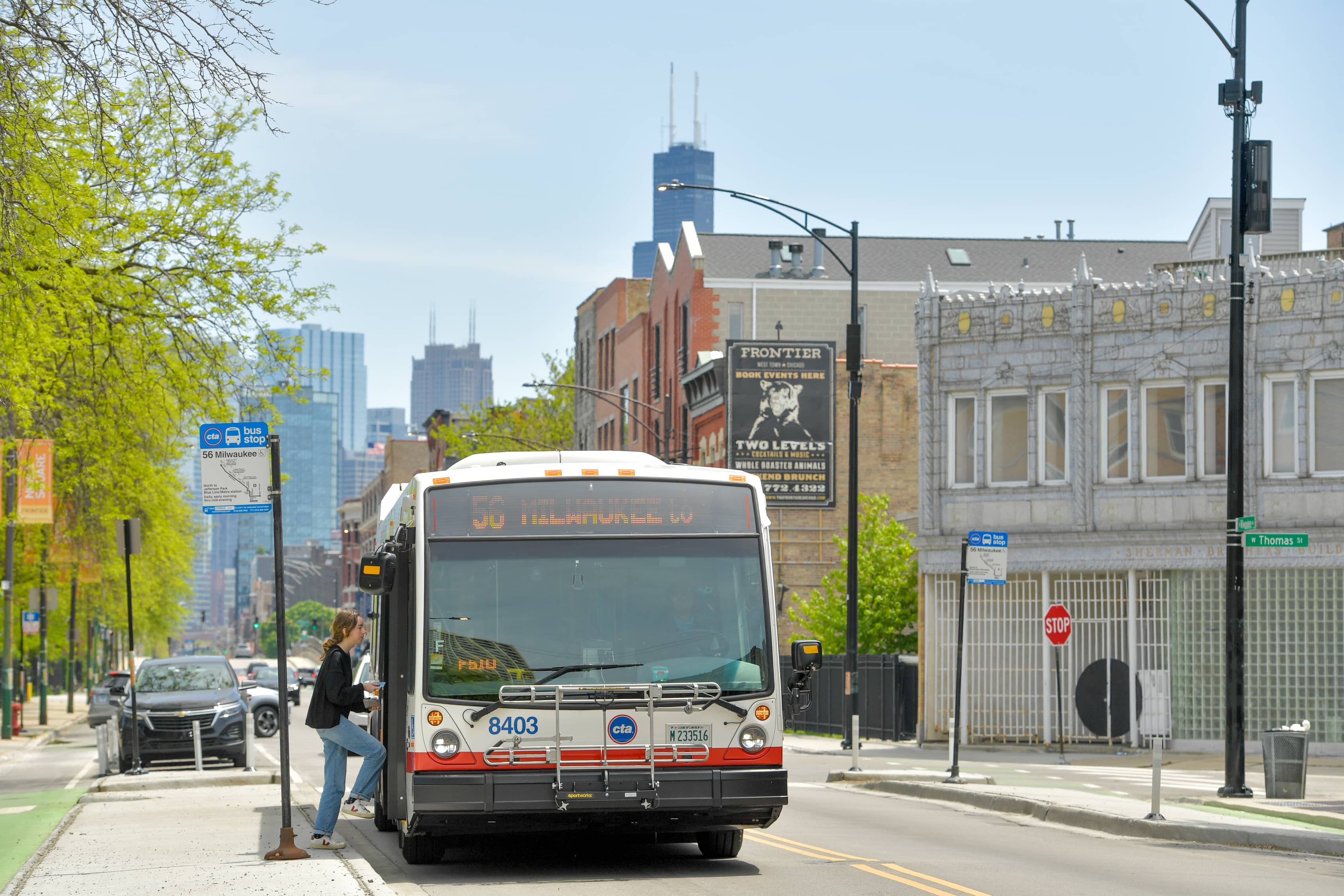
While Mayor 6.6 heads to Rome, the CTA still feels like a rolling crime scene
Mayor Brandon Johnson is heading to Rome to visit the Pope, because apparently what Chicago desperately needs right now is another taxpayer-funded photo opportunity overseas while the city continues to slide deeper into dysfunction. Perhaps Pope Leo can pray for a miracle and ask that the mayor finally receive some sort of divine injection of common sense.
There is something profoundly bizarre about the mayor of a financially struggling American city darting off to the Vatican to deliver a White Sox baseball cap to the Pope while the transit system back home increasingly resembles a rolling crime scene.
Relationships with the Vatican are generally supposed to be the province of the federal government. One could perhaps make an argument for the governor of Illinois visiting Rome on behalf of the state, but it is difficult to understand why the mayor of Chicago believes this is an appropriate priority at a moment when the city is drowning in debt, facing budget crises, and struggling to maintain even the most basic standards of public order.
At least Mayor Johnson does not have to take the CTA to get there. If he did, he might discover what ordinary Chicagoans already know: Despite months of press conferences, promises, and taxpayer-funded public relations campaigns, the CTA remains deeply unsafe. Riders continue to encounter open disorder, aggressive behavior, fare evasion, mentally unstable individuals roaming trains unchecked, and violent incidents serious enough to deter many residents from using public transportation altogether. The Chicago Sun-Times reported this week that CTA leadership is celebrating a decline in violent crime following the agency’s much-publicized “security surge,” which increased police presence by 75 percent, expanded K9 patrols, and eliminated the CTA’s failed unarmed security guard program. CTA officials proudly pointed to reductions in reported violent incidents on trains and buses compared to last year, particularly on portions of the Red Line.
What the agency is far less eager to emphasize, however, is that violent crime on the system remains historically elevated. The same Sun-Times report noted aggravated batteries on the CTA remain higher than at any point in nearly a quarter-century. Through May 10, there had already been 89 aggravated batteries reported on the system this year, an increase over 2025, 2024, and 2023. In other words, City Hall is congratulating itself for reducing violence from catastrophic levels to merely terrible. That is the standard the Chicago government now seems to expect the public to accept. Riders are essentially being told they should feel grateful because conditions are not quite as awful as they recently were, even though the system still remains far more dangerous than it was for most of its modern history.
What makes the situation even more infuriating is that this security push only materialized after pressure from the Trump administration and threats to withhold federal funding. The mayor and CTA leadership did not suddenly rediscover the importance of public safety because innocent riders were being robbed, assaulted, sexually attacked, shoved onto tracks, or burned alive. They acted because Washington threatened the money. That reality says everything about the priorities of this administration. Chicago’s political leadership consistently responds to two things above all else: Political pressure and taxpayer cash. Until federal officials forced the issue, Brandon Johnson appeared perfectly willing to tolerate the ongoing deterioration of the CTA in the name of progressive ideology and anti-policing politics.
The city’s leadership spent years downplaying disorder, demonizing proactive policing, and treating even basic law enforcement as somehow morally suspect. The predictable result was that disorder expanded to fill the vacuum. Fare evasion exploded, public drug use became commonplace, homeless encampments spread throughout the transit system, and violent incidents steadily mounted while ordinary working people were left to absorb the consequences. Now, after years of denial, the city is attempting to reverse course without ever admitting that its policies helped create the problem in the first place.
That tension is obvious in the CTA’s current approach. On one hand, officials have clearly recognized that increased police presence does help deter crime and restore at least some degree of public confidence. On the other hand, the CTA is simultaneously preparing to spend nearly $13 million on additional “violence intervention” and “crisis intervention” pilot programs involving non-law-enforcement specialists, because Chicago’s governing class still cannot fully bring itself to acknowledge the uncomfortable truth that criminals are primarily deterred by visible enforcement and meaningful consequences rather than outreach coordinators, consultants, workshops, or politically fashionable slogans.
The continued violence on the CTA is not theoretical, nor is it confined to statistics buried in agency reports. Just this week, another CTA bus driver was brutally attacked in a fresh reminder the transit system remains fundamentally unsafe for both workers and passengers. These incidents are no longer shocking anomalies. They have become part of the daily reality of life in Chicago. Bus operators are expected to navigate dangerous neighborhoods, confront fare evaders, deal with mentally unstable passengers, and absorb verbal and physical abuse while often having little immediate protection available to them. That reality raises a question that would have been considered extraordinary years ago but is becoming increasingly unavoidable today: Should CTA drivers be permitted — and properly trained — to carry handguns for self-defense?
That idea will undoubtedly horrify Chicago’s progressive political establishment, but reality has a way of overriding ideology. Criminals already assume many CTA employees are effectively defenseless, which only emboldens violent behavior. If properly screened and trained transit operators were authorized to carry firearms under strict standards similar to those applied to off-duty law enforcement or armored transport personnel, and if that fact were heavily publicized both in the media and directly on buses and trains, it could create an important deterrent effect. The purpose would not be to encourage confrontation, but to prevent it. Criminals prefer soft targets, and right now the CTA practically advertises vulnerability. At some point, Chicago is going to have to decide whether the rights and safety of law-abiding workers and passengers matter more than preserving ideological taboos that criminals clearly do not respect.
The broader financial dysfunction surrounding the CTA only compounds the problem. Fare evasion remains rampant throughout the system, draining desperately needed revenue from an already struggling agency. Everybody sees it. Riders routinely walk through emergency gates without paying, hop turnstiles in front of employees, and board buses through rear doors without consequence. Once again, this is what happens when leadership sends the message that rules are optional and enforcement is somehow impolite. The CTA increasingly serves as a perfect microcosm of the broader dysfunction consuming Chicago itself. The same political establishment that cannot keep trains safe also cannot manage the schools effectively, cannot control spending, cannot maintain public confidence, and cannot prioritize competence over ideology.
Chicago Public Schools now consume staggering amounts of taxpayer money, yet schools are simultaneously laying off teachers and janitors. So where exactly is all the money going? Bloated administration. Political patronage. Consultants. Bureaucratic expansion. Payroll armies. Different horse, same manure. That has become the governing philosophy of modern Chicago: Spend more, tax more, borrow more, demand more — and somehow still deliver less. Meanwhile, Mayor 6.6 is flying to Rome. Perhaps he will return with another carefully staged photo opportunity, another speech about “equity,” and another round of promises that things are improving.
But Chicagoans are increasingly done listening to slogans while watching their city decline around them. They want trains that are safe. They want buses that arrive on time. They want stations that are not open-air psychiatric wards. They want schools that function. They want city government to stop treating taxpayers like an endlessly refillable ATM machine. Most of all, they want leadership grounded in reality rather than ideology.
The CTA security effort is a perfect example of what happens when political leaders ignore obvious problems until outside pressure forces them to act. And even then, the response remains hesitant, politically cautious, and wrapped in bureaucratic doublespeak designed to avoid admitting the underlying failure. The tragedy is that Chicago was once a city associated with competence. It built things. Managed things. Enforced standards. Expected order. Now City Hall celebrates modest declines in violent crime while aggravated batteries remain at historic highs. That is not progress. That is managed decline.
Maybe while Brandon Johnson is in Rome, someone can explain to him that miracles usually require discipline, sacrifice, responsibility, and hard choices — not just more taxpayer money.
