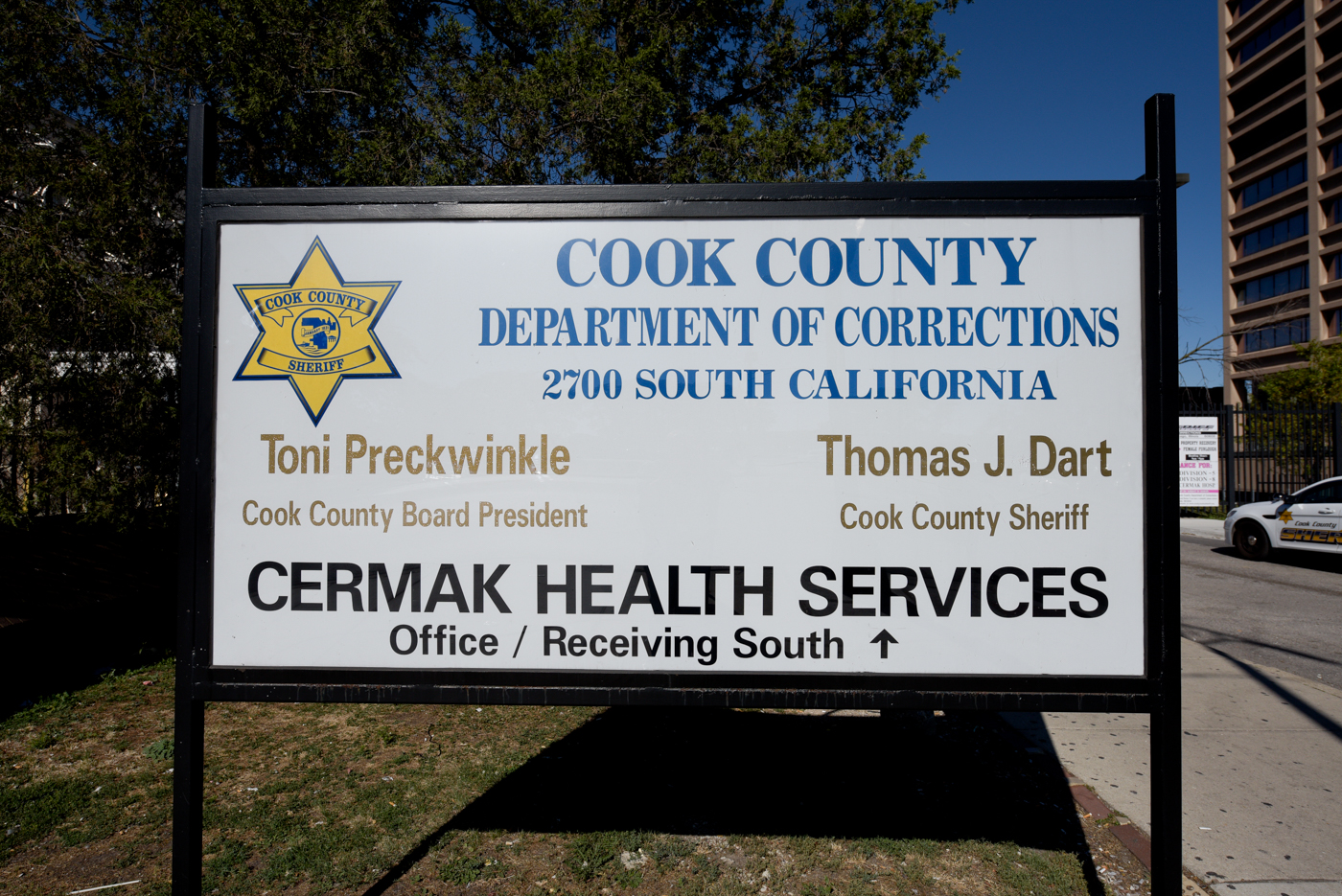
Does Tom Dart deserve another four years in office?
It has been a tumultuous period for Cook County Sheriff Tom Dart. While his office successfully transferred the logistically troubled Electronic Monitoring (EM) program to the Chief Judge of the Circuit Court, the Sheriff’s Department remains mired in deeply rooted operational and legal crises.
As Dart navigates his historic tenure, a wave of systemic failures has drawn intense scrutiny. A data analysis by CBS Chicago revealed the Sheriff’s Office failed to serve 75 percent of protection orders issued between 2021 and 2023, leaving thousands of domestic violence victims vulnerable. Furthermore, the office recently finalized a massive $31 million settlement with over 560 women to resolve a historic sexual harassment lawsuit. Compounding these crises, the jail recorded 18 inmate deaths in 2023 — several linked to violence and an influx of drug-laced paper smuggled behind bars.
All of this, of course, demands answers, but as he prepares for reelection, will Dart escape the wrath of voters at the ballot box?
A man who has occupied the Sheriff’s Office for two decades, Dart seems untroubled with controversies and public scandals which have afflicted his office in his five terms as Cook County’s top lawman. A bone-deep loyalist to Cook County Board President Toni Preckwinkle, Dart’s fealty to Preckwinkle is found, for example, in his willingness to reduce the population of Cook County Jail to suit her political whims. In return, Dart’s feudal loyalty is rewarded with Preckwinkle mobilizing a legion of foot soldiers to canvass neighborhoods for signatures to enable Dart to earn a spot on the ballot and attorneys representing the Cook County Democratic Party applying every legal measure to thwart potential challengers from opposing him in elections.
If you think the tide of corruption and incompetence in Dart’s office is nearing ebb, think again. It is rising, growing more scandalous, and likely to cost taxpayers untold millions in settlements.
Internal whistleblower and legal battles
Management of the department faces a direct challenge from within. Sergeant Nicole Pagani, a veteran investigator assigned to an FBI public corruption task force, filed a sweeping federal whistleblower lawsuit against Dart and his executive team. Pagani alleges she uncovered evidence of widespread official misconduct, including ghost payrolling, nepotism, computer fraud, and the misappropriation of millions in federal COVID relief funds. According to her complaint, when her findings threatened Dart’s inner circle, top aides attempted to stymie the investigation, resulting in her punitive demotion and transfer.
The fallout extended to separate litigation from high-ranking jail administrators who were terminated during the probe. While the department maintains these reassignments and terminations were standard discretionary policy, the parallel lawsuits continue to wind through federal court, threatening deeper reputational damage.
Security failures and staffing cuts
Courthouse security has also shown structural fractures. In May 2025, 32-year-old Richard Cotton sprinted out of the Leighton Criminal Courthouse and escaped after a judge ordered him remanded on weapons charges. Critics point to drastic long-term personnel reductions as the root cause of these vulnerabilities; Cook County budget analyses show court security staffing plummeted from a peak of 1,659 personnel in 2006 to just 881.
These workforce reductions have directly crippled both courtroom lockup security and the Warrant Unit responsible for executing protective orders. Within the jail, understaffing has led to the dangerous practice of "cross-watching" — requiring a single officer to monitor two distinct residential tiers simultaneously — resulting in officers withour sufficient backup being violently assaulted by inmates.
Sexual harassment and violent attacks against corrections officers
Though Dart’s office and the County recently came to terms to settle the largest sexual harassment lawsuit in history, female Cook County Sheriff staff members continue to endure sexual harassment and assaults, the tepid response to the charges, and the latest pending lawsuits. Predictably, Dart’s legal representative pointed fingers at the courts, but failed to mention the understaffed jail that was the main culprit contributing to the situation.
Along with sexual harassment there has been repulsive endemic violence against correctional officers at the jail. Over the past few months, officers have been beaten by inmates multiple times. One violent incident occurred when an officer was conducting checks alone due to the lack of backup. An inmate had to step in to save the officer’s life. Just a few weeks later, another officer suffered horrendous injuries during yet another violent attack -- again without backup.
The jail continues to allow cross-watching, which is a dangerous practice of having just one officer supervise two different tiers. As injustice watch reported, the outrageous amount of deaths and subsequent lawsuits could have been prevented by proper staffing. Instead, Dart continues to make officers serve mandatory overtime to cover more shifts, another dangerous practice that deteriorates the mental and physical health of the brave men and women serving at the jail.
The ongoing harassment and frequent assaults inspire a few questions: First, how does Cook County expect to attract, recruit and retain competent corrections officials if dangerous conditions at the courts and jail such as these exist? Second, how many corrections officers have been injured or committed suicide as a result of these circumstances? It is incumbent on Cook County commissioners to carefully examine the Sheriff’s Office. Accordingly, the commissioners must also need to provide adequate staffing and hold Dart to account for tolerating an environment in which this shocking and dangerous behavior occurs.
Treatment of inmates
The consequences of an understaffed Cook County Sheriff’s Office has also taken a toll on those detained at Cook County Jail. While inmates who have committed terrible crimes are unworthy of sympathy, they, too, deserve a sense of security while awaiting trial. In 2023, 18 inmate deaths were recorded in custody.
The presence of mentally ill persons in jails is a problem. If an individual suffering from mental illness is determined to be a threat to themself or others, there is a need to keep them safe from harm. To avert problems involving treatment and to furnish the special care mentally ill persons in custody deserve, corrections officers need to be trained to respond appropriately, and jail facilities need to be properly resourced to properly manage emergencies. Moreover, treatment of inmates suffering from mental illness should also include discharge protocols to ensure continuity of care in the community.
As Sheriff of Cook County, it is Dart’s responsibility to ensure appropriate management of mentally ill inmates in Cook County jail facilities. The refusal to provide information and the lack of adherence to the law will undoubtedly result in more lawsuits and the appearance of cruelty to those suffering from mental illnesses.
Hidden restraints and political friction
Strain on the Sherriff's Office has severely impacted the treatment of pretrial detainees. An April 2025 investigation by the Illinois Answers Project exposed that Cook County Jail staff used highly restrictive restraint chairs on inmates 874 times over a five-year period. While the jail tracked these events internally, it failed to report a single instance to the Illinois Department of Corrections, violating state mandatory transparency standards regarding the restraint of mentally ill detainees. Worse, Cook County Sheriff’s officials did not respond to questions over the length of time inmates were restrained.
Simultaneously, Dart has broken out into open friction with Cook County State’s Attorney Eileen O'Neill Burke, who assumed office in late 2024. Following O'Neill Burke's policy shifts — including expanding felony shoplifting charges and bypassing traditional felony review layers — the Cook County Jail population spiked by 11 percent in her first six months. Dart’s public tracking of these detention rates highlights the deep ideological divide gripping Cook County's criminal justice leadership.
As Dart eyes the next political cycle, the convergence of federal whistleblower claims, historic unserved protection orders, and state reporting violations ensures his decades-long control of the department will face its most aggressive challenge yet from taxpayers and voters alike.
Ultimately, the systemic fractures within the Cook County Sheriff’s Office carry a steep double penalty: One measured in the millions of taxpayer dollars spent on civil settlements, and the other measured in human vulnerability. From unserved orders of protection on the streets to unbacked officers and unmonitored detainees inside the jail, the department’s structural failures have moved from internal administrative issues into the public square.
Managing one of the largest unified justice systems in the world is a monumental task, but as these compounding crises deepen, the line between institutional strain and intentional negligence has never been thinner.
