Lawrence Reed and the System That Failed: Booking, Release, and the Mental Health Gap
The system, once again, fails the victim of crime
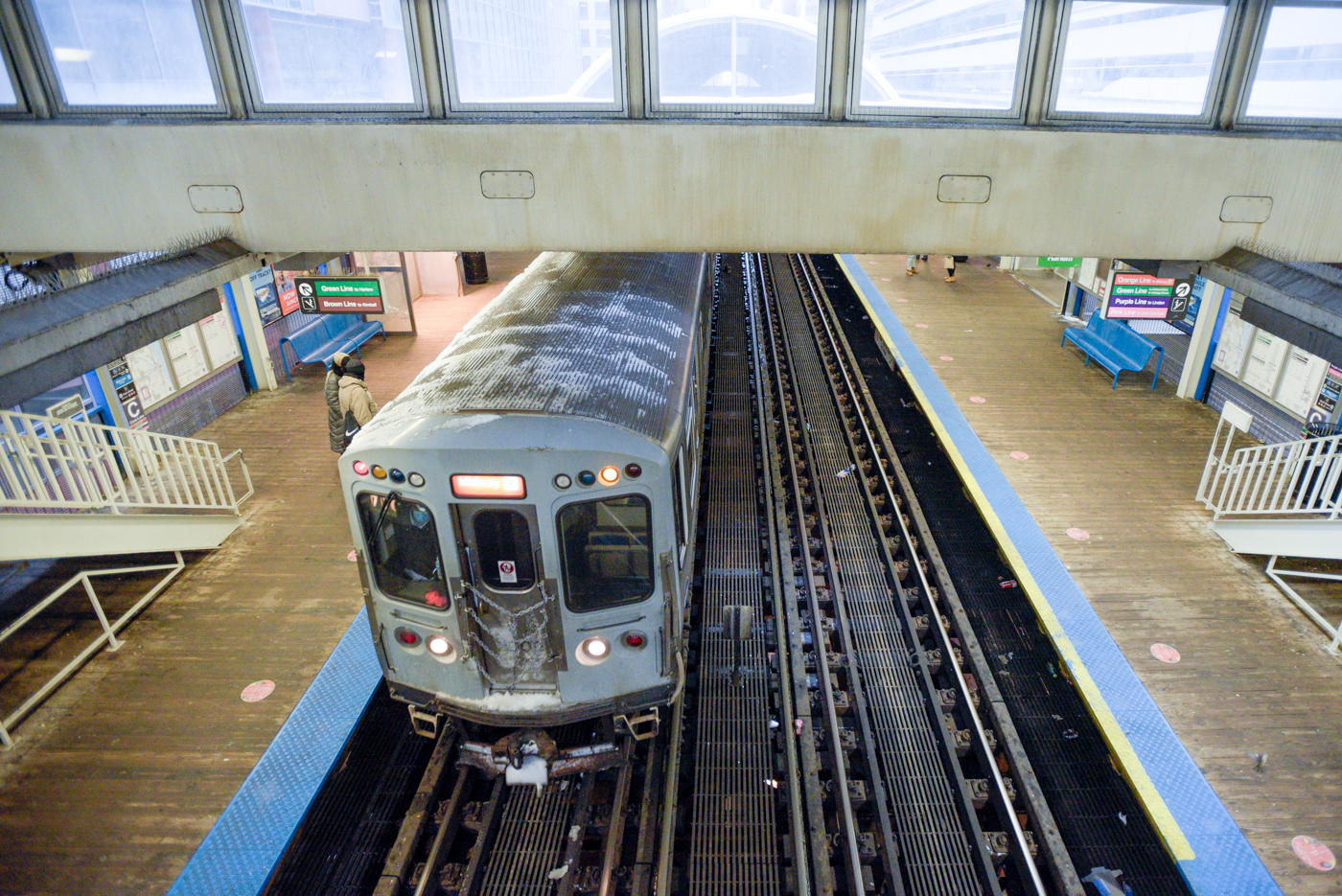
The November 2025 attack on a young woman riding a CTA Blue Line train, allegedly set on fire by 50‑year‑old Lawrence Reed, has become a brutal case study in how the criminal justice and mental‑health systems intersect — and fail. Reed was not an unknown quantity suddenly emerging from nowhere. By the time of the attack, he had reportedly been arrested roughly 72 times and convicted in at least 15 cases, including eight felonies. He had a documented history of violence, arson‑related behavior, and serious mental health problems. Yet he was at liberty on electronic monitoring when he walked onto that train with a bottle of accelerant.
Using Reed as the focal point allows us to examine, step by step, what happens when a crime enters the system, how repeat offenders cycle through arrest, booking, and release, and why the absence of robust mental health follow‑up is not an unfortunate side note but a central public safety failure.
To understand how someone like Reed can have dozens of prior arrests and still be riding a train unsupervised, you have to start with the mechanics of a single criminal event. The pipeline always begins in the real world: a threat, an assault, a fire, a weapon pulled on a stranger. That real‑world event becomes official only when someone calls 911 or walks into a police station. A dispatcher enters the information into a computer‑aided dispatch system, officers are assigned, and the first moment of formal documentation is born: an incident number and an initial classification — battery, robbery, arson, or something similar. At that point nothing is adjudicated, nothing is proven, but the system has acquired another dot in a long trail of data.
When officers arrive, they secure the scene, separate victims and witnesses, and, if possible, detain or arrest a suspect. If there is probable cause — witness statements, video, physical evidence — the suspect is transported to a district station or the county jail and enters the booking process. Booking is the mechanical heart of the system. Personal information is collected. Fingerprints and a photograph are taken. A criminal‑history check produces prior arrests and convictions. Property is inventoried. The arresting officer writes a narrative describing what allegedly happened and proposes charges. In theory, this is where the system sees the suspect not as an abstraction but as a complete file: past violence, prior failures to appear, past weapons cases, and any indication of mental health crises or hospitalizations.
For serious charges, particularly felonies, prosecutors review the police reports and evidence and decide whether to file formal charges. This is the second major gate. Some arrests are never charged; others are downgraded from felonies to misdemeanors. When charges are filed, the accused must be brought before a judge for an initial appearance and bond hearing. It is here that the balance between public safety and individual liberty is struck, usually in a matter of minutes. The judge hears the charge, listens to a summary of the person’s record and the facts, and then decides: Detention, release under certain conditions, or release with minimal supervision. In recent years, especially in large urban counties, this process has leaned heavily toward release with conditions — electronic monitoring, curfews, or stay‑away orders.
Reed’s history shows how often a defendant can pass through this gate and return to the street. With 72 arrests and only about 15 convictions, the ratio of convictions to arrests is roughly one-in-five. Many cases were dismissed, pled down, or never formally pursued. Even when he was convicted of aggravated arson after attempting to set fire to the James R. Thompson Center, Reed reportedly received probation instead of a significant prison term. The system, in other words, recognized he had committed a serious crime but opted for community supervision rather than incapacitation. That choice is not unusual; probation is a common sentence, especially for defendants with mental health issues, but without a strong treatment structure it often functions as a paper leash rather than true management of risk.
Behind these numbers is a deeper structural problem: the criminal justice system was not designed to manage chronic psychiatric illness. Booking officers can check a box for “mental health flag,” prosecutors can mention a history of hospitalizations, and judges can order a defendant to comply with treatment, but none of those steps ensure that treatment actually happens. The moment a mentally ill offender walks out of the jail or prison gate, the burden shifts onto an underfunded community mental health system that often does not know the person is coming, has no guaranteed funding to treat them, and cannot compel them to take medication unless they meet a high threshold of imminent danger. When supervision ends — when probation or mandatory supervised release expires — the formal tie to the state is cut. For someone like Reed, that means periods of close contact with the system, followed by long stretches in which no one is clinically tracking his condition.
A serious approach to cases like Reed’s would require a fundamentally different staffing model. Imagine that Cook County decided it would no longer accept that its jail and prison doors simply swing open for mentally ill violent offenders with no meaningful follow‑up. Instead, every such individual leaving custody would be assigned a small interlocking team: a parole or probation officer, a licensed mental health clinician, and a case manager who focuses on housing, benefits, and day‑to‑day stability. Each team would carry a limited caseload so they could visit clients in person, coordinate with hospitals, and respond quickly when someone stops showing up for appointments or begins to decompensate.
Rough numbers illustrate the scale. Suppose there are several thousand offenders in Cook County at any given time with both a violent record and a serious mental health diagnosis. If each clinician can realistically manage 30 to 40 such cases with intensive outreach, and each case manager and supervising officer can manage a similar number, you would need on the order of 100 clinicians, 100 case managers, and a comparable number of specialized probation or parole officers dedicated solely to this population. These are not glamorous jobs, but they are the difference between a name on a docket sheet and an actual human being whose medication, housing, and stability are actively monitored.
The cost is not trivial, but it is also not unimaginable in the context of a large urban county. If an average fully‑loaded annual cost for each professional — salary, benefits, training, and administrative overhead — is in the range of $100,000, adding 300 such positions would imply roughly $30 million a year. That is a large headline number, yet it must be weighed against the existing costs of repeated arrests, jail stays, emergency room visits, fire and police responses, property damage, and, in cases like the CTA attack, the incalculable human cost to victims and the long‑term medical expenditures associated with catastrophic injury. In practice, the system already pays for the consequences of untreated illness; it simply pays on the back end, in crisis, instead of investing up front in management and prevention.
There is also an intangible but real cost in public confidence. When citizens learn that a man charged with a random, sadistic attack on a stranger has 72 prior arrests, a string of convictions, and a documented history of dangerous behavior, they reasonably ask whether the system is serious about protecting them. They do not see the incremental steps inside the pipeline — the incident reports, the arraignments, the probation orders. They see only that each step somehow ended with the same outcome: the man was free. Without a visible, credible system of mental health follow‑up, the public is left to conclude that release decisions are little more than roll‑of‑the‑dice gambles performed at their expense.
Using Lawrence Reed as the centerpiece is not about vilifying a single individual. It is about forcing the system to confront the pattern his case exposes. The mechanics of booking and charging worked as they were designed to work: Chicago Police arrested him, prosecutors charged him, judges imposed sentences and conditions. The failure lies in what happened after those mechanical steps were complete.
A modern urban justice system cannot afford to treat mental illness as a footnote to criminal history. If we continue to release mentally ill violent offenders into the community with only a thin paper trail and a hope that overburdened clinics will catch them, we should not be surprised when another victim, on another train or sidewalk, becomes the next case study. The choice is not between punishment and compassion; it is between a structured, staffed, and funded system of long‑term management, or the current improvisation that relies on luck until it runs out.
