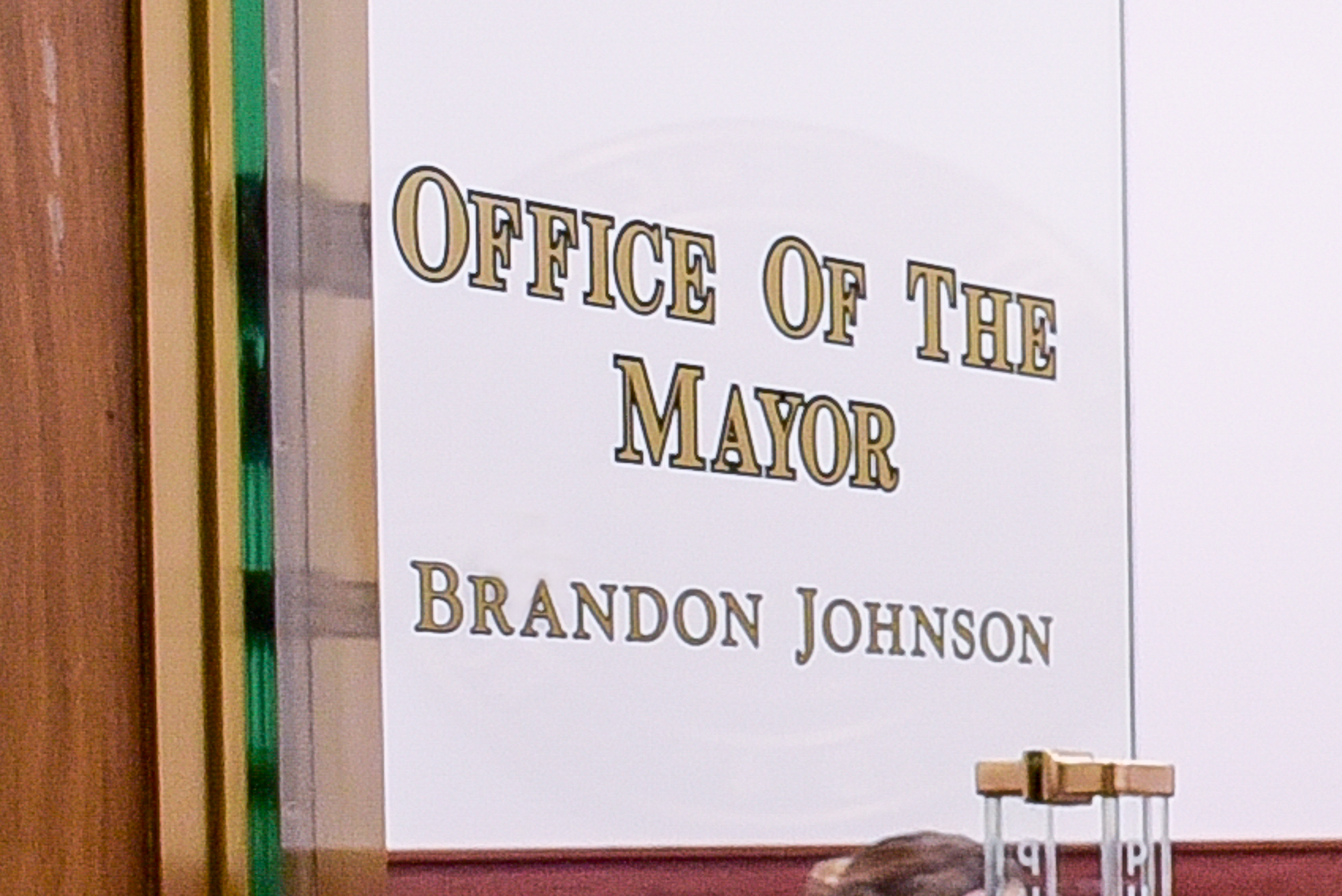
Mayor’s address was a 20-minute infomercial for the progressive brand
For anyone who has observed Mayor Brandon Johnson over the past three years, it is patently obvious a fundamental part of his self-identity revolves around viewing himself and preferring the general public view him as realistic rather than ideological, driven by reason rather than partisanship, and, above all, morally unimpeachable.
All of this, of course, is palpably untrue. An unusually dogmatic man, Johnson is virtually blind to contradictions to his policy proposals, and the mayor has routinely demonstrated an inability to adjust his views to the manifest failure of his vision for Chicago. When the mayor’s worldview collides with corporeality, he is incapable of adapting or adjusting. Rather, Johnson insists on residing in a make-believe world of his creation.
As Mayor Johnson nears the end of his third year in office, he appears optimistic. As mayors who are likely to seek reelection do, Johnson performed a retrospective review of the last two-and-a-half years in office a recent address at City Club Chicago. However, rather than using his address as a moment for public introspection and admitting error in some of his decisions, striking a conciliatory tone, or signaling a willingness to compromise with aldermen in the city’s legislative chamber, the mayor delivered what more closely resembled an exceedingly tedious stump speech and renewed his commitment to apply progressive prescriptions to Chicago.
An address which followed a bruising budget debate in December, the most interesting aspect of Johnson’s 20-minute speech at City Club was the triumphalist tone with which he trumpeted the decline in homicides. While mentioning reduced crime rates, the mayor spent a considerable amount of time praising Chicago Police for their role in cutting violent crime. Though the mayor ballyhooed the constructive relationship between CPD and Community Violence Interrupters (CVIs), noticeably absent was any recognition of the crucial role Eileen O’Neill Burke has played in the dramatic drop in crime. While Johnson's impulse to treat reduced crime rates as the genius of his so-called progressive policies is understandable, it was unforgivable for Johnson to not to give Burke at least partial credit for the reduction in crime rates.
Johnson being Johnson, the mayor then engaged in a fit of bloviating by maintaining the drop in crime to 60-year lows was accomplished only through his “holistic” policies — affordable housing and mental health services — before bemoaning the “lock-them-up” method of the past. A strategy Johnson agonizingly denounced as “morally” wrong, the mayor contended mass incarceration wrecked families, led to police misconduct settlements, and failed to keep Chicago safe. Unsurprisingly, the mayor omitted the gruesome toll exacted on families by criminals — primarily violent gangs — who spread misery and mayhem throughout Chicago neighborhoods. A fact vividly chronicled by CWB Chicago, the public safety news outlet estimates nearly 20 percent of those out on bail for violent crimes including murder and attempted murder were on pretrial release while awaiting trial on other felony charges. For good measure, Johnson exuberantly repeated the fiction his leadership has also led to a homicide clearance rate surpassing 70 percent. An obvious falsehood, actual arrests for homicides in 2025 hovered around 25 percent and in the previous five years, only 30 percent of homicides resulted in an arrest.
At other points in his talk, Johnson lambasted his preferred bugbears of the progressive Left — President Donald Trump and Immigration Enforcement (ICE) — portraying Trump and ICE as villainous, sinister, unprincipled or heretical. Amid hyperventilating over ICE’s use of tear gas and agents armed with “long guns,” the mayor took advantage of the platform City Club afforded to repeat the “zip tied” canard.
Though trimming the city’s bloated budget is the sensible course of action, predictably — and for obvious reasons — the mayor avoided referencing the city’s fiscal dislocation or fragile credit rating. Amid his discomfort over Chicago’s gloomy budget outlook, Johnson’s only acknowledgement of financial matters was his advertising throwing $552 million in TIF surplus at the Chicago Public Schools to indulge his potentates at the Chicago Teachers Union.
A speech delivered with a steely resolve, Johnson saved his strongest assertion for the conclusion. A segment of his address which could have doubled for a stern moral sermon, the mayor repeated, yet again, his call for “progressive revenue” to redeem Chicago. Billing it as an urgent call to action on a matter of grave concern, Johnson implored Springfield to renew its effort to pass a millionaires tax to resist Trump in the thick of the president’s “cuts to food, health care, and education.” A compulsive tendency of his, Johnson’s appeal for progressive revenue reached a crescendo with him blurting out the simplistic slogan, “the rich should pay their fair share.”
Disaster has brought no hard lessons for Johnson
If Mayor Johnson sought to justify his reelection, he didn’t make a case for a second term in his speech at City Club. A tenure virtually devoid of any substantive accomplishments, what Chicago witnessed at City Club was Johnson at his most long-winded and intellectually exhausted, acting as if garrulousness can be an effective counterbalance to the absence of a governing vision.
A speech teeming with comforting lies, very little of what the mayor said lined up with reality. Overstating the economic conditions in Chicago or claiming the battle against crime is nearly won are so self-evidently contradicted by the facts it erodes the mayor’s credibility on two of the most important issues confronting Chicago. Worse, Johnson almost entirely ducked the city's hopelessly failing schools. With little good news to publicize on CPS, along with a stagnant economy, fiscal dislocation, and crime, Johnson simply resorted to reciting progressive slogans — “building the safest, most affordable big city in America” — to divert from problems affecting the city.
While Johnson’s speech at City Club may have jazzed his progressive base, the theme of his speech — “Investing in People” has performed miracles for Chicago — revealed the mayor is operating in a bubble. If we pull the curtain back on the last two-and-a-half years, Chicago’s fortunes have not been reversed. Despite massive public spending, crime stubbornly prevails, CPS schools continue to turn out half-ignorant students, and the city’s public transit system is unusable. Elsewhere, Johnson has failed to fill leadership posts across city government, the plan to reopen mental health clinics has stalled, and in a demonstration of how remarkably lazy he is, Johnson broke the campaign promise to open city-owned grocery stores after failing to submit paperwork for state funding.
In other areas, Johnson has fared little better. Since 2024, the mayor and the “multigenerational, multicultural” progressive movement he leads has suffered a string of humiliating defeats. In 2024, his cherished tax referendum — Bring Chicago Home — went down in flames. One year later, in 2025, a proposed property tax hike was resoundingly defeated 50-0 in the City Council. In tandem with those losses, in November 2024, of the 10 open seats on the Board of Education, only four candidates backed by Johnson were victorious. Most recently, Johnson was rebuked by aldermen in the City Council when they passed an alternative budget which rebuffed his proposed corporate head tax.
A man virtually blind to reality, the mayor seems clueless to the utter failure of his policy proposals; his failures don’t seem to dawn on him. While previous mayors — even Lori Lightfoot — eventually understood the errors of their ways and adjusted to constructively govern, Johnson remains off in his own world, incapable of rethinking or rebooting his approach to governance.
Brandon Johnson can believe he is wonderful, his programs are fantastic successes, and he has neither erred nor needs to change. The mayor can also delude himself into believing Chicago residents are blind to his stunning historical achievements. Nevertheless, Johnson’s failures are in plain sight, they are massive and multiplying, and yet our mayor is off in his own little world, where his strategy to defeat crime, solve Chicago’s unsound budget, and raise the fortunes of Chicago’s hopelessly failing schools is all going according to plan, like clockwork, without a hitch. To witness this charade unfold before our eyes is both psychologically riveting and altogether demoralizing.
After two-and-a-half years occupying City Hall, Brandon Johnson has very little to look back on with pride. A man who was spectacularly unprepared to be mayor, Johnson's term in office has been a full catastrophe. Though Chicago is slipping off the rails, from his sharply partisan, hard-Left speech at City Club, we’ve learned Johnson intends to enter his final year in office unwilling to acknowledging mistakes and with no plan on pivoting toward the center. Instead, Johnson aims to plough ahead with a demonstrably failed strategy without adjusting his ideological blinders.
