Ken Griffin’s departure from Chicago was not the loss of an ordinary resident. Griffin’s exit was billions lost in taxes and philanthrophy
Last week, Illinois’ most-famous out-migrant and most generous philanthropist Ken Griffin pledged $3 billion to Carnegie Mellon University. Of the $3 billion contribution, $2 billion alone went to the construction of a Miami campus. This follows $400 million in charitable contributions in his new home state of Florida.
Governor JB Pritzker and other Democrats publicly mocked and celebrated Griffin’s departure from Illinois. When Griffin exited Chicago, over 1,000 employees, all of whom are well compensated, followed him to Florida. Griffin’s departure left Pritzker to wield his massive fortune to transform Illinois into a one-party state to do his bidding.
Gone with Griffin is his personal state income tax contributions, which exceed $200 million annually and accounts for an astounding over one percent of total state income tax revenue. Illinois loses an estimated $100 million to $250 million annually in recurring individual employee and corporate tax revenue. Relocation reduced Citadel's local headcount by over 1,000 suppresses ancillary local spending by high-earning finance professionals.
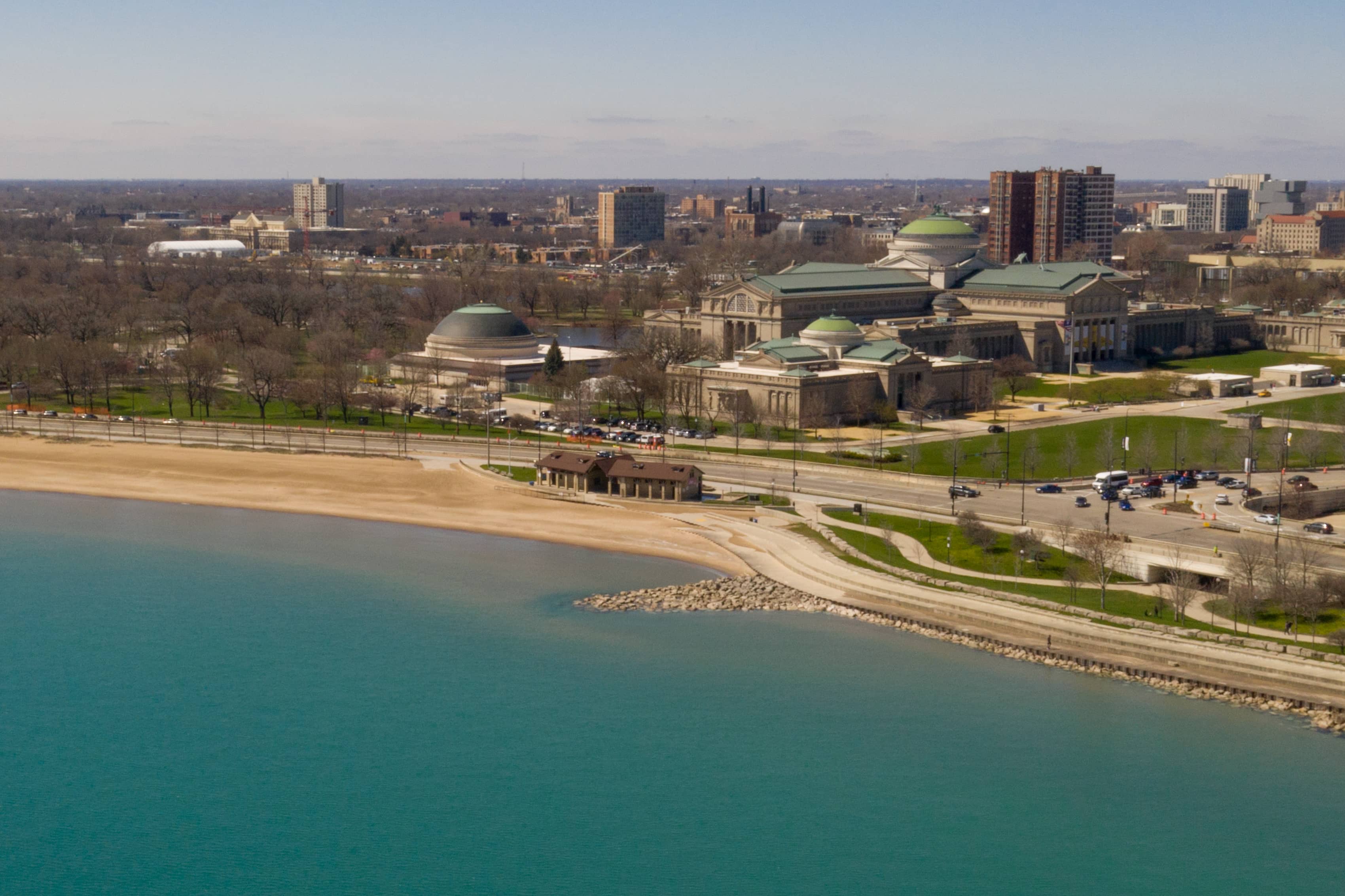
Meanwhile, local Chicago civic and cultural institutions face a significant funding deficit without his spigot of donations. Aside from Griffin paying over $10 billion in state income taxes in the last decade, Griffin’s charitable contributions have amounted to $650 million to Chicago area cultural institutions. Among the institutions that benefited from Griffin’s largesse: The Museum of Science and Industry, which received a $125 million gift; the University of Chicago, which received over $150 million; and Northwestern Hospital’s esophageal disease research division, which accepted $35 million. Tens of millions more were bestowed to the Art Institute of Chicago, the Field Museum, Shirley Ryan AbilityLab, Lakefront Trail, and Project HOOD.
Contrast Griffin’s benevolence with JB Pritzker, who paid $869,000 and the family trust paid $4.5 million in state income taxes in 2024 and whose charitable contributions are paltry by comparison. Meanwhile, Pritzker and his extended billionaire family — who control the Hyatt hotel empire and vast investment trusts — have historically benefited from a charitable government through various commercial property tax reductions, public-backed venue funding, and legacy tax structures. And who can forget “Toilet Gate,” where Pritzker removed the toilets from the Gold Coast residential property he owned for the purpose of reducing the tax assessment. Though Pritzker eventually paid back the rebate, it was discovered he had originally dodged a $331,432 tax bill.
To political critics, Griffin's sin being a prominent GOP megadonor pouring millions into campaigns like the effort to defeat Pritzker’s Constitutional Amendment to replace Illinois' flat income tax and to elect and support moderate Republican candidates. Of course critics of Griffin ignore Pritzker’s massive political spending which eclipses Griffin’s own as Pritzker has become the bank for a Democrat Party.
Since launching his first run for the governor’s mansion in 2018, Pritzker has poured a total of $439 million into his campaigns. Outside his self-funded campaigns, Pritzker has used his immense wealth to underwrite the Democratic Governors Association (DGA) campaign to help defeat Aurora Mayor Richard Irvin in the Republican primary for governor so he could face the much more conservative Darren Bailey, who he perceived was easier to beat. Broader tracking of the multi-week campaign push estimates the total DGA/Pritzker meddling footprint of almost $50.4 million, almost half funded by Pritzker himself.
Griffin’s departure has accelerated Illinois political transformation into a one party state as the gerrymandered political map guaranteeing Democrats a veto proof legislature and 14 of 17 Congressional House seats makes it impossible for Republicans to raise money to compete for office statewide. A Republican governor would be rendered impotent by the Democratic controlled state legislature.
The result of Democrat domination over the state is little debate over the issues facing residents and no accountability for the governor and his Democratic allies. For example: Largely uncontested was the 38 consecutive 30-day statewide disaster proclamations during the COVID-19 pandemic alone. The $1.6 billion paid on noncitizen health care programs cost Illinois taxpayers through the summer of 2024, most if it unauthorized, far outstripping original estimates by over $547 million was ignored.
Then there are delays in financial reporting, failures to resolve recurring audit findings, and transparency issues within state agencies. The 2023 mandated state audit was delayed for 763 days and Illinois ranks 46th in financial transparency. State audits released by the Illinois Auditor General have documented persistent operational, fiscal, and oversight failings across multiple state agencies under the Pritzker administration. Illinois ranked 46th in the 2026 Financial Transparency Score from nonprofit think tank “Truth in Accounting.” Illinois got 51 out of 100 possible points, with only Connecticut, Georgia, North Carolina and California scoring lower.
And then there is of course his state budgets which have been largely rubber stamped by the General Assembly, as the budget has seen a 40 percent increase in spending since 2019. Pritzker’s 63 tax and fee increases during this period have taken $86 billion more from taxpayers and has made Illinois residents pay the highest combined taxes and fees in the nation, some 52 percent more than the national average. And what does the state have to show it? Illinois ranks last in equity and third in outmigration as half of remaining residents surveyed saying they’d leave if they had the means.
Illinois didn’t just lose a resident — it lost billions in future revenue and philanthropy. This didn’t happen by chance. It is the direct result of policies that punish success, push out job creators, and ignore the reality that families and businesses can and will leave when a state makes it too hard to stay. Other states are competing to attract upper investment and growth. Illinois Democrats are continuing policies that drive them away.
