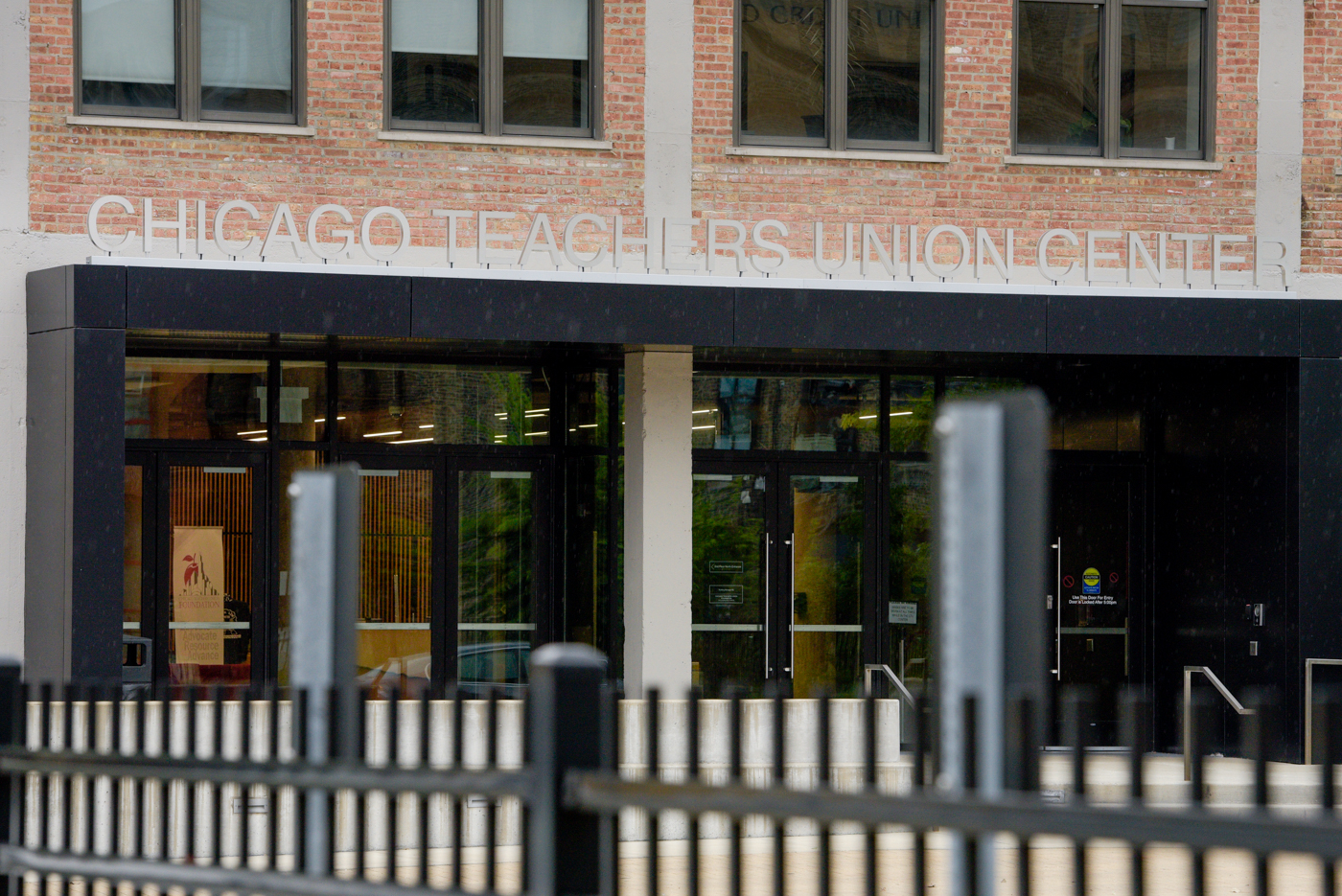
Primary election results and recent polling offer a glimmer of hope voters are ready to address the greatest challenge facing the city, and the CTU’s destructive stranglehold over the city’s schools
If there was one unequivocal winner in last week’s Democratic primary, it was Governor J.B. Pritzker. Pritzker bet big on his lieutenant governor, Juliana Stratton, in the open U.S. Senate primary, backing her with his endorsement and millions of dollars in outside spending through his Illinois Future PAC. The most unequivocal loser was the Chicago Teachers Union (CTU), which saw seven of the 13 candidates it endorsed lose contested seats. That outcome offers hope that voters are beginning to grasp the danger the CTU poses to the future of the city’s children.
Super PACs tied to the pro‑Israel lobby, the cryptocurrency industry, and emerging sectors such as artificial intelligence also spent heavily in Illinois, with mixed results. None could claim a sweeping victory. In the most important races, ideological differences among Democrats were minimal — nearly all ran as assertive anti‑Trump candidates, leaving little daylight on national issues. Stratton’s edge came not from a unique message but from Pritzker’s financial war chest and the mechanics of a crowded primary.
Many Illinoisans are understandably frustrated with an electoral system that entrenches incumbents, discourages challengers, and depresses voter turnout — while underwritten by special‑interest Super PACs and Pritzker’s seemingly unlimited campaign funds. Yet within that uncompetitive landscape, this primary did offer a ray of light for those who want accountability in education policy: the CTU’s political machine extended its losing streak.
CTU’s losing record and political reach
The CTU’s losses on Tuesday, March 17 are part of a growing pattern of setbacks since it helped install Brandon Johnson as mayor in 2023. In 2024, CTU‑backed candidate Clayton Harris lost the Democratic primary for Cook County State’s Attorney to moderate reformer Eileen O’Neill Burke. Voters also rejected the CTU‑supported real estate transfer tax hike, and in the 2024 Chicago school board elections, CTU‑aligned candidates lost six of nine competitive seats despite unprecedented union spending. The union and its affiliates reportedly spent about $2.8 million on those races, with roughly $2.1 million — about 75 percent — supporting losing campaigns. For an organization once treated as an unstoppable political juggernaut, that record should be a wake‑up call.
Over the last 15 years, the CTU has transformed from a traditional labor organization into a full‑blown political party operating under a union label. Since the CORE caucus took control in 2010, its leadership has embraced “social movement unionism” — combining aggressive contract demands with citywide organizing, heavy independent expenditures, and direct efforts to elect union members and ideologically aligned officials. Today, the CTU’s political arm is among Chicago’s top campaign spenders, outpacing business and education‑reform groups alike.
The most visible outcome of that strategy was the 2023 election of former CTU organizer Brandon Johnson as mayor. Union‑aligned entities contributed roughly $5.7 million to his campaign, and Johnson remained on the CTU payroll during his run — underscoring how closely his political rise was tied to the union. By 2024, CTU and its affiliates had become the dominant political spender in city elections, helping to elect dozens of aldermen and consolidating influence, particularly within the Democratic Socialist bloc of the City Council.
Power over schools, not progress for students
The CTU’s policy agenda increasingly prioritizes expanding its institutional power rather than improving outcomes for Chicago’s most vulnerable children. The result is a two‑tier education system: affluent families can enroll their children in private schools or move to the suburbs, while low‑income, predominantly Black and Latino families are concentrated in under‑enrolled, underperforming district schools.
Rather than confront this inequality, CTU‑backed contracts and policies maintain the status quo — even as district leaders scale back standardized testing and phase out transparent reporting tools that once allowed families to compare school performance. Local School Councils and principals have little real control over budgets, staffing, or curriculum; they cannot lengthen the day, extend the school year, or implement proven models without central‑office approval. In practice, CTU’s political leverage and a union‑friendly central bureaucracy block innovation and reinforce mediocrity.
Despite per‑pupil spending now exceeding $32,000 — a 44 percent increase since 2019 — academic results remain dismal. Prior to the state lowering its proficiency benchmarks in 2025, fewer than one‑third of CPS students in grades 3–8 were proficient in reading, and barely one‑sixth met standards in math on the Illinois Assessment of Readiness. In 2024, only 22.4 percent of 11th graders were proficient in reading and 18.6 percent in math on the SAT. Roughly 40 percent of both students and teachers have been classified as “chronically absent” in recent state data.
Accountability has largely disappeared. The CTU frequently pulls teachers from classrooms for protests, strikes, and political actions, treating children as leverage rather than learners. During the pandemic, the CTU drove one of the longest school closures in the nation — roughly 78 weeks — even after studies showed schools could reopen safely. Those lost months fueled massive learning loss and coincided with a surge in youth violence: student shootings and deaths rose by nearly 50 percent during that period.
Meanwhile, CPS staff spent nearly $23.6 million on travel between 2021 and 2024 — often for “questionable” professional development junkets, with poor oversight and frequent policy violations.
Safety, accountability, and lost opportunity
The CTU’s extreme posturing has also made schools less safe. The union campaigned to remove Chicago Police Department officers from high school entrances that had previously helped deter violence, even as school shootings tripled in the past decade. Chicago now leads the nation in youth shootings and murders, with more than 3,000 reported shots fired near schools last year.
At the same time, the union has offered little cooperation in addressing serious child‑abuse allegations against members. In 2025, the CPS Office of Inspector General’s Sexual Allegations Unit opened 246 abuse cases, substantiating 55 of them.
CTU’s influence also stifles alternatives. The union led the campaign to eliminate the Invest in Kids tax‑credit scholarship program, which had provided tuition support to nearly 15,000 low‑income students statewide. Ending that modest program — which cost less than one‑half of one percent of the K‑12 budget — stripped poor families of options that affluent parents take for granted.
The union similarly opposes Illinois participation in new federal education tax‑credit initiatives designed to help families afford tutoring, special‑education services, transportation, and essential supplies. By blocking assistance that flows directly to parents rather than school systems, the CTU effectively tells low‑income families to accept whatever school they are assigned — regardless of quality.
The CTU has also fought to cap public charter‑school growth and limit student enrollment, even among high‑performing charters serving predominantly Black and Latino students. Many of these schools operate on one‑third less funding than district averages, yet deliver superior outcomes. The union and its allies have also sought to weaken or eliminate selective‑enrollment and magnet programs that highlight neighborhood school failures.
A civil rights issue for Chicago’s families
Economist Thomas Sowell once warned that “the most dangerous form of racism is not the kind that comes with a hood or a noose — it’s the kind that comes with an eraser, erasing opportunities.” That is precisely what happens when a political machine undermines school choice, blocks academic transparency, and eliminates charter or magnet options. The primary victims are overwhelmingly Black and Latino children whose parents cannot simply move or pay tuition elsewhere.
School choice has become the civil rights struggle of our time, and Chicago’s families are on the front lines. For two generations, the CTU’s control over city schools has coincided with stagnation in achievement — even as budgets rise and contracts balloon. Every family deserves the power to choose something better: a high‑quality public charter, magnet, selective‑enrollment, or innovative local model shaped by empowered communities.
Recent polls suggest the CTU’s dominance is becoming a political liability. A March 2026 MS Strategies survey found only 27.5 percent of Chicago voters view the CTU favorably, while 53.6 percent hold an unfavorable opinion, and half say they are less likely to support candidates taking CTU money. That may explain why longtime union ally and Cook County Board President **Toni Preckwinkle** declined to seek a CTU endorsement this cycle — even as she retained support from other labor groups.
The shift toward a fully elected school board gives Chicagoans a rare chance to break the monopoly. The latest election results — combined with CTU’s plummeting popularity — offer hope that voters will again reject union‑backed candidates in 2027. Ending the CTU’s monopoly on failure is the first step toward a school system that serves children, not the political machine holding them hostage.
