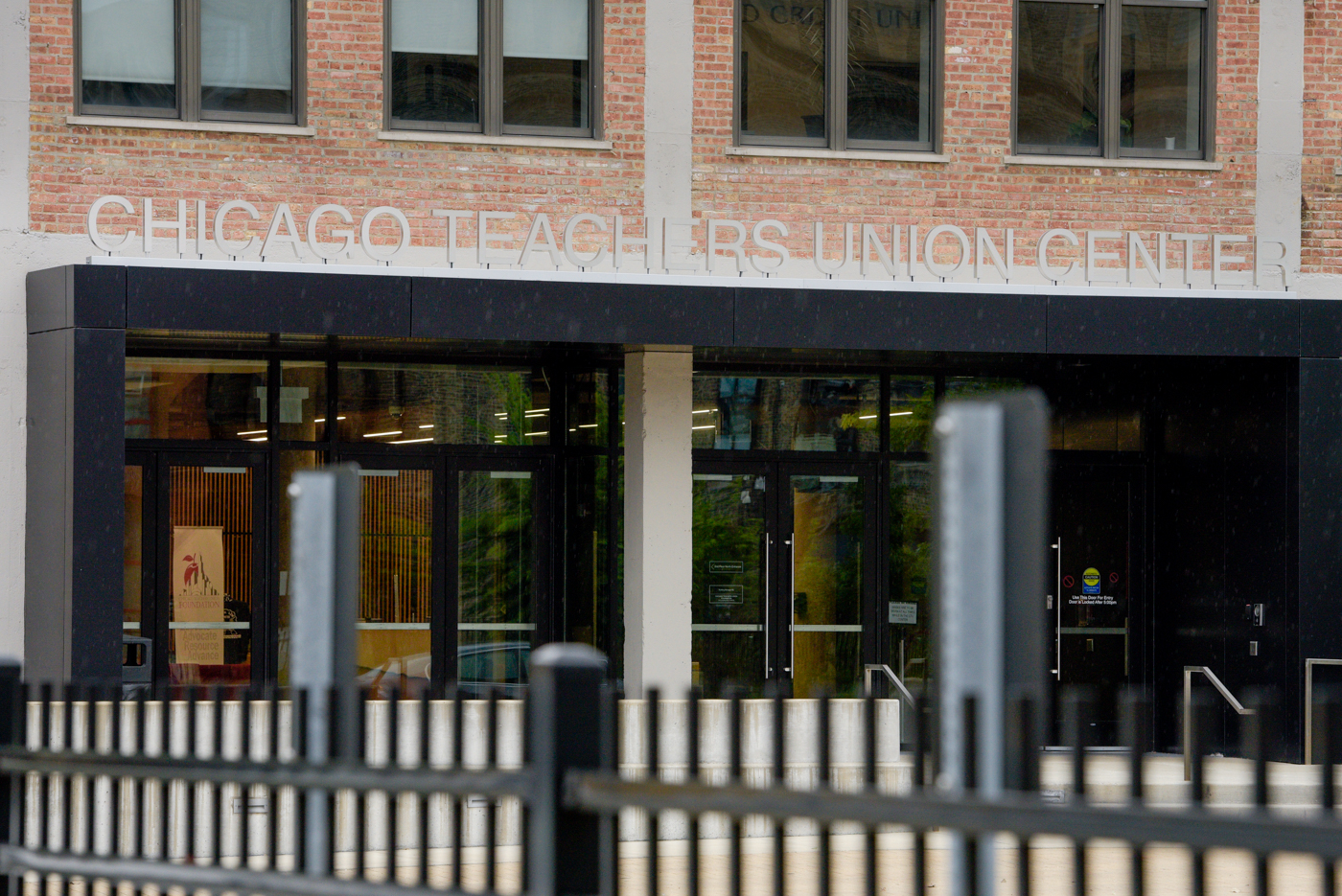
With a handy assist from a proxy in the General Assembly, the CTU continues its guerrilla war on Chicago's low-income families
For those who still question whether the Chicago Teachers Union’s (CTU) holds working families in contempt, those doubts should be erased by a new bill introduced by State Senator Graciela Guzman (20), which blocks Illinois from participating in the federal education scholarship program, Educational Choice for Children Act. Guzman, a former CTU staffer like Mayor Brandon Johnson, submitted her anti-family bill shortly after receiving a $72,000 campaign contribution from the CTU. Since October 2023, she has collected over $519,000 from teachers’ unions.
The scholarship program — costing the state and public schools nothing — would generate hundreds of millions of dollars for scholarships while providing all parents, whether in public, private, or homeschool settings, funding for tutoring, transportation, early childhood, and special education services. It prioritizes families earning up to 300 percent of the federal poverty level. The CTU’s effort to block Illinois’ participation would deny overwhelmingly Black and Latino working families vital educational resources.
Illinois: A bellwether against school choice
Despite the strong performance of private schools, Illinois became the only state in the nation to eliminate support for parents seeking private education when the General Assembly allowed the “Invest in Kids” scholarship program to expire in 2023. At the same time Illinois allowed “Invest in Kids” to sunset, 12 states created or expanded similar programs, bringing the total number of states with private choice or tax-credit scholarships to 35.
With Guzman doing the CTU’s dirty work in the General Assembly, the CTU is pressuring Governor J.B. Pritzker not to opt in to the new federal tax credit program that would help lower-income parents pay private school tuition and help public school parents cover tutoring, transportation, and special education costs. This, even though CTU President Stacy Davis Gates and up to 40 percent of CTU members with children reportedly send their own kids to private or selective-enrollment schools.
The Constitution’s Equal Protection Clause guarantees children the right to a free and equal education — it does not require that education to come only from government institutions. Public school districts frequently contract with private schools for special education and alternative programs. Federally funded programs such as Head Start, Pell Grants, the GI Bill, and federal student loans all support education at private institutions, as does Illinois’ Monetary Award Program (MAP).
Private schools outperform public schools
Private schools consistently demonstrate superior academic performance, even in economically disadvantaged areas. According to Kathleen Porter-Magee of the Manhattan Institute, “If Catholic schools were a state, they would be the best-performing in the nation on all four NAEP tests.” The National Assessment of Educational Progress (NAEP) repeatedly shows Catholic schools outperforming public schools across demographics.
During the pandemic, the difference became stark. Chicago Public Schools remained closed for 78 consecutive weeks due to CTU opposition to reopening, contributing to learning loss, social-emotional struggles, and a spike in youth violence. Catholic schools, meanwhile, reopened for in-person learning early, experienced little academic regression, and offered stability for students in challenging neighborhoods.
A tale of two schools
Two West Side schools — Chicago Hope Academy and Manley High School — perfectly illustrate the profound effects of school choice. At Hope Academy, an independent Christian school in East Garfield Park, 299 students compete for limited seats, with 90 percent of graduates attending four-year colleges. In 2024, the school received an astonishing 400 applications for just 74 openings. It ranks among the top 20 percent of Illinois high schools in performance and diversity.
A mile away, Manley High School tells a different story: Designed for 1,176 students, Manley now enrolls only 78. Seventy percent are chronically absent, just three percent meet state standards in English, and none meet benchmarks in math. The school’s graduation rate is 35 percent, with fewer than 10 percent going to college.
Debunking teachers’ union school choice propaganda
National teachers’ unions have doubled down on opposing school choice, claiming it “diverts” resources from public schools. In fact, each student who transfers to a private school through a scholarship saves the system money per pupil because the district’s local funding is not tied to enrollment. A 2023 Illinois Policy Institute analysis estimated public schools save about $12,000 per student who departs, since scholarships typically cost one-third less per pupil than district spending.
The claim that vouchers “rob” districts is false. Schools receive money for students they educate, not those they lose. Between 2000 and 2019, even districts facing large charter and private school enrollments saw overall funding increase. School choice creates accountability and competition, benefiting parents and students alike.
Contrary to claims that school choice reduces funding, overall funding increased between 2000 and pre-COVID 2019 in districts where charter and private schools are prevalent. School choice broadens public support for funding schools. Between 2000 and 2019, before COVID struck — unleashing an unprecedented flood of federal dollars to schools — even districts facing large charter and private school enrollments saw overall funding increases that far exceeded inflation.
Teachers’ unions often argue that instead of funding choice, policymakers should “fix” public schools. This is a false dichotomy. We can improve public schools and expand choice. Studies show competition drives public schools to innovate — improving staff performance, communication with families, and student outcomes. A 2021 Fordham Institute analysis found 26 of 28 studies showed positive or neutral effects from school choice policies.
Expanding school choice for low-income families
Most parents in Chicago are unable to afford private school tuition. Of the approximately 315,000 CPS students, the vast majority come from low-income or economically disadvantaged households. In Chicago, this often means a household income below about $38,000 — making even modest private school tuition an impossible burden. Without scholarships or tax-credit programs, lower- and middle-income families who seek a better option are effectively locked out.
Low-income families deserve the same educational options as affluent families — including many CTU leaders. The Supreme Court’s decision in Brown v. Board of Education (1954) affirmed every child’s right to equitable educational opportunity, yet city and state leaders often limit that right to government-run schools — a misreading the Court has rejected.
The city should urge the state to join the new federal Tax Credit Scholarship Program. Pairing it with a revived state “Invest in Kids” initiative and private school student enrollment per capita share from supplemental city funding from Chicago Public Schools’ (CPS) Tax Increment Financing (TIF) surpluses could dramatically expand private school scholarships and provide private schools with funding needed to support their students and recruit and retain quality staff.
The state scholarship costs less than one percent of what the state spends on Pre-K–12 education, and the federal scholarship program offers a federal tax credit that costs the state nothing. As for the TIF surplus, since 2019 CPS has received $1.9 billion in additional TIF surplus funds, yet not a dollar has gone to help families seeking private education despite private schools educating 17 percent of Chicago’s K–12 students.
Longer term, the city could invite state-recognized parochial and private schools to become “contract schools,” allowing the district to count parochial students in the state aid formula or as charter schools. As mentioned, school districts have historically contracted with private schools for special education and alternative programs. In 1997, CPS approved “Youth Connection Charter”— a network of 17 private schools that has graduated more than 25,000 students, including over 1,200 last year.
A thriving city requires school choice
The public schools’ “golden era” coincided with a thriving parochial system. In its peak years, 1970–'72, Chicago Public Schools enrolled about 580,000 students, while Catholic schools served nearly 250,000. Today, public school enrollment stands at roughly 316,000, and Archdiocese school enrollment is 64,000. This decline parallels the city’s shrinking middle class. A WBEZ analysis found that the share of middle-income residents fell from 50 percent in 1970 to just 16 percent in 2019.
Since 2000, the biggest impact has been in the Black community. Black enrollment in CPS this year is 113,000 — less than half the 227,000 in the 1999–2000 school year. Children are overrepresented in the city’s massive Black population decline. While there was a 14 percent decline in the city’s Black population from 2000 to 2020, the number of Black children, age 17 and younger, fell by 49 percent as Black families with children exited the city in record numbers.
Without scholarships, these parents are trapped — unable to access the same opportunities CTU leaders claim for their own children. Illinois families should not have to wait for failing districts to improve. Parents deserve choice now — the same right to seek a better education that affluent and politically connected families already enjoy. It’s time to restore fairness and empower all families to choose the school that best serves their children.
