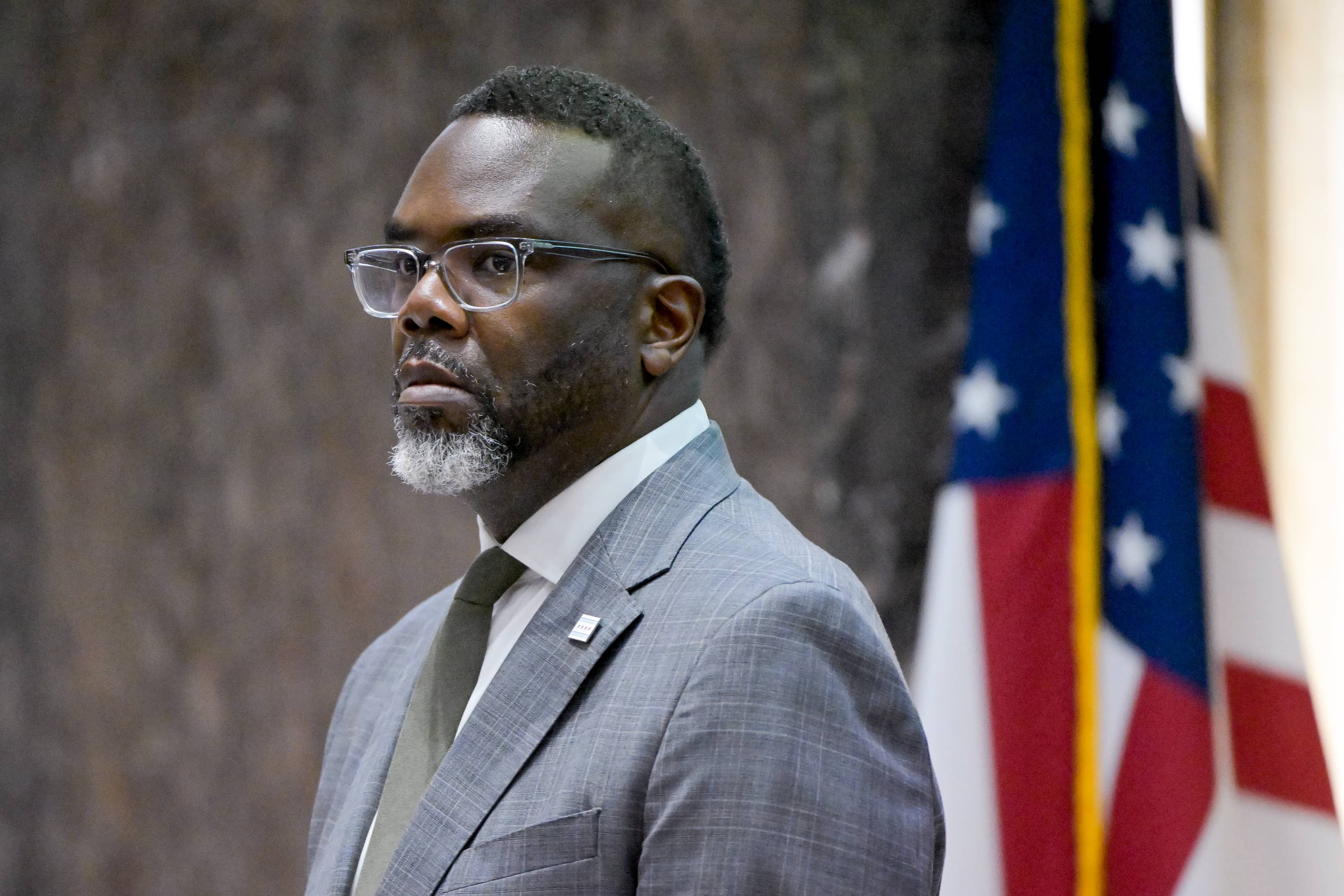
It is doubtful Mayor Johnson will get his Head Tax, but he will get most everything else he sought in his budget, including his big CTU contract bailout. This is bad news for long neglected communities and taxpayers
While the City Council deserves praise for opposing Mayor Brandon Johnson’s job-killing Head Tax, the fact remains the battle over the Head Tax has served as an effective diversion from the mayor’s true objective. Though the mayor has posed as a moral paragon and a dogged defender of the working class, his singular aim in the 2026 budget is to provide a massive infusion of funding to settle the first year of the record $1.6 billion Chicago Teachers Union (CTU) contract. Ultimately, this victory for the CTU will come at the expense of taxpayers and the very neighborhoods Johnson routinely claims he seeks to invest in and improve.
Regardless of the outcome of the grind on the Council floor, this budget is poised to hand over $552 million to the Chicago Public Schools (CPS). This $552 million comes in addition to an astounding $962 million in property tax revenue from the Tax Increment Financing (TIF) Program Johnson has consigned to CPS over the last two years. Aside from $962 million in TIF funds, the CPS has also taken in another $462 million in school district property taxes. This astonishing $1.4 billion in property tax revenue should utterly dismantle the mayor’s claim he has not raised property taxes.
For clarity, the TIF windfall for the school district is not a return of stolen tax dollars as the CTU would like the public to believe. On the contrary, when property taxes are diverted to TIFs, local government tax rates rise to meet their district’s levy requests. The TIF property tax windfall is combined with the district’s annual share of city property tax revenues, which has grown to 58 percent and amounts to nearly one-fourth of total Illinois state K-12 and 40 percent of all state funding it receives from the federal government.
The balance of the mayor’s budget will remain largely intact, including almost 20 tax and fee increases that are not tied to the taxpayers’ income bracket. This includes the regressive increase to the Cloud Tax that will increase the nation-leading 11 percent tax on computer use and services to 14 percent. This will further solidify Chicago’s standing as the highest taxed city in the highest taxed state in the nation.
As for the Mayor’s “Invest in People” agenda, it is sheer fantasy. In the new budget, Johnson fails to fulfill a crucial campaign promise to reopen all 12 of the mental health centers shuttered under former Mayor Rahm Emanuel. The summer jobs program will be finally returned to its pre-COVID levels under former Mayor Lori Lightfoot. Similarly, Johnson’s budget will have merely moved certain existing programs that were financed out of the $1.9 billion in one-time American Rescue Plan Act of 2021 revenues to new funding sources.
As for the affordable housing promised by the mayor’s 2024 $830 million bond initiative, to date it has amounted to slightly over $300 million in city subsidies, the result of which is only 500 affordable units. The fact remains Mayor Johnson has no comprehensive affordable housing strategy if you exclude his efforts to house illegal migrants. Johnson’s regulatory reforms haven’t been implemented and his affordable housing subsidies to politically connected developers should send progressives into a frenzy.
Particularly insulting is the mayor’s attempt to link specific new revenue streams to existing spending categories as a way to create the illusion these are new investments and to stigmatize opposition to his tax proposals. Expressly disingenuous is Johnson’s claim the Head Tax is dedicated to “public safety” and “violence prevention” programs that already existed, creating the false narrative that opposing the tax is opposing safety investments themselves.
Look for the city’s financial crisis to continue with COVID monies exhausted, as it is highly questionable whether this budget is balanced. It certainly is not balanced structurally. The city, at best, will manage to get through the year largely by leaving police vacancies unfilled only to face a similar budget deficit next year, along with the added pressure to help schools pay for a second year of the CTU contract.
The mayor’s office has shown little interest or ability in confronting the spending side of Chicago’s fiscal crisis, even as city spending has ballooned by almost $7 billion or 70 percent since 2019. Johnson commissioned Ernst & Young report identified approximate savings and new revenues through efficiencies, consolidation, and smarter procurement between $530 million and $1.4 billion. Yet the mayor’s budget barely touches these recommendations, choosing instead to lean on new taxes.
Unfortunately, while many City Council members have become emboldened to tackle the mayor on single issues like his proposed property tax increase last year and this year’s Head Tax proposal, they have neither the access to the information nor the analytical expertise to undertake the needed comprehensive review of city spending despite the EY road map. To accomplish this task, the City Council needs its own independent financial team of budget and financial management experts with the authority and support needed to evaluate not only the city but also city-controlled agency spending.
Alas, the majority of the City Council does not yet have the political will to tackle the biggest threat to the city’s financial health next to unfunded pensions: The massive subsidies provided to schools. A record figure of $1.3 billion, look for Johnson, “the CTU’s Manchurian Candidate,” to continue to faithfully advance the Chicago Teachers Union’s agenda ahead of the broader public interest of the city.
Next year’s budget will again prioritize CPS and CTU, helping to bail out a school district struggling to fund back‑to‑back record labor contracts. Rather than insisting on structural reforms at CPS — right‑sizing under‑enrolled schools, controlling payroll growth, aligning labor costs with enrollment — Johnson has chosen to protect CTU priorities and will continue to shift more of the burden onto the city’s budget and taxpayers.
For the time being, we should expect the mayor, his former CTU employers, and his left-wing supporters to use the rejection of the Head Tax to only intensify their rhetoric about taxing the rich and faulting Head Tax opponents in the City Council for the city’s financial crisis and lack of investment in long neglected communities.
Look no further than the characterization of the City Council opposition by the CTU and increasingly referred to by Chicago’s obliging media as the pro-Trump “Corporate Caucus.”
