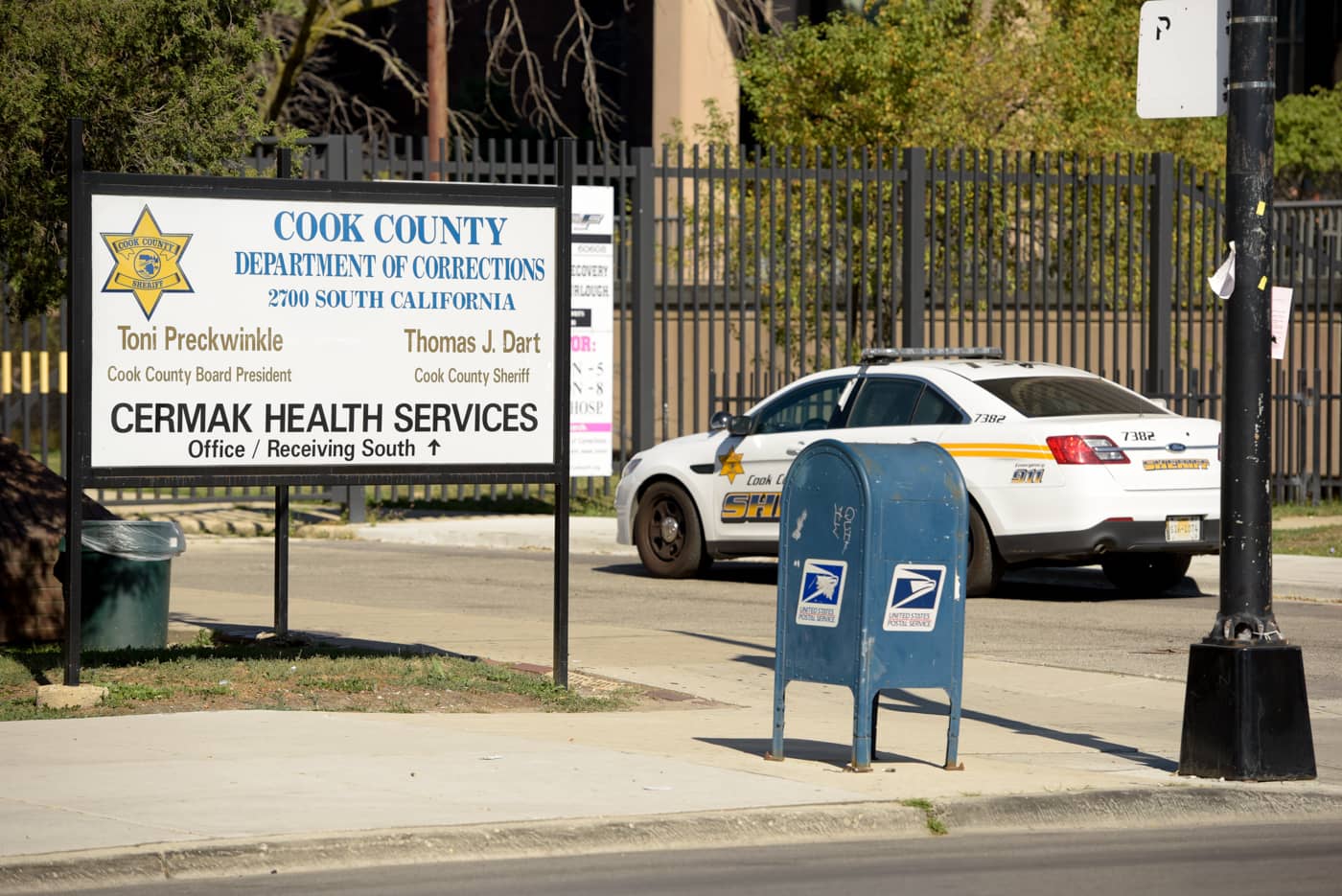
The Sheriff’s Office can discipline officers for missed security checks. Who holds its managers accountable for assigning one officer to several housing tiers and failing to account for where the workforce goes?
In 2023, Cook County Jail supervisors brought disciplinary charges against nearly 100 officers for failing to complete mandatory security checks, according to an Injustice Watch investigation. State inspectors found missed checks in 12 percent of the shifts they reviewed. Yet when the same newsroom sought records showing how often people in custody had been subjected to cross-watching — one officer assigned to more than one housing tier — the Sheriff's Office said it did not track those figures.
Think about that imbalance. The administration could count alleged failures by individual officers, but reportedly could not count how often its own staffing decisions placed those officers in the very conditions that made supervision difficult. That is not an argument against security checks. It is an argument against an accountability system that scrutinizes the person performing the assignment while leaving the people who designed it largely beyond view.
I have spent years warning about cross-watching. I have personally seen officers expected to supervise four separate tiers alone. I have been ordered to accept such assignments and refused. Other officers have described assignments stretching to six tiers. Those accounts should be examined, but even four makes the problem obvious: A correctional officer cannot be present in four secured housing areas at once. A fight, a suicide attempt, an overdose or an extortion threat will not wait for the officer to finish a round somewhere else.
During mandatory in-service training in March 2025, Steven Wilensky, First Assistant Executive Director of the Cook County Department of Corrections, lectured officers about security checks. He emphasized recording those checks electronically in connection with legal compliance and oversight requirements.
I challenged him directly. I told him officers cannot be in two places at once and that, in the Residential Treatment Unit, officers were being assigned three, sometimes four housing tiers by themselves. How could the administration demand these checks be performed properly while failing to address cross-watching?
Wilensky responded: “I know we are asking you to do an impossible job, but we need you to do it anyway.”
That statement illustrates the very problem I have spent years trying to expose. The administration acknowledges the impossibility of the assignment but continues demanding compliance, placing the responsibility for failure on the officers ordered to perform it. Electronic documentation may serve the Sheriff's Office's legal interests, but it cannot prevent an assault, recognize a medical emergency, or replace an officer's physical presence. When tragedy strikes, officers face discipline, people in custody suffer, and families are left searching for answers. Meanwhile, the administrative decisions that created those conditions too often escape equivalent scrutiny.
Illinois's county-jail regulation, 20 Ill. Adm. Code 701.130, makes the distinction. It requires enough officers to provide direct or indirect supervision, personal observations at least every 30 minutes — not merely camera observation — and documentation of those visits. The rule recognizes indirect-supervision facility designs; it does not excuse a deployment that makes required personal checks impracticable. Logging is part of compliance. Human observation is the purpose. When one officer is assigned several physically separate tiers, management should explain how both obligations are supposed to be met.
I have done more than complain privately. Since at least 2022, I have formally challenged cross watching, reported my concerns to supervisors and the administration, pursued grievances, approached union representatives and oversight bodies, and sent information about legal protections for safety advocacy to officers, administrators and county commissioners. I founded the Cook County Corrections Coalition (C4) to help officers understand their rights and press for safer conditions. The warnings were specific, repeated and directed at people who had the authority to respond.
Officers have told me what often follows: more mandatory overtime, frustration, fear of discipline, and the sense that a legitimate safety objection will be treated as defiance. I have watched experienced officers become disillusioned and new officers struggle with assignments for which they were not adequately prepared. When staff believe management regards them as expendable, the institution loses more than morale. It loses the judgment and experience that cannot be replaced by adding names to a recruitment class.
There is an established history behind these concerns. In the Janda and Bollinger labor dispute, the Illinois Labor Relations Board found the Sheriff's Office retaliated against two correctional officers for protected, concerted protests against cross-watching. The finding remained intact after appellate review in 2024. That ruling did not declare every cross-watching assignment illegal. It did demonstrate that officers' safety protests cannot simply be punished because the employer dislikes them.
For people held inside the jail, the stakes are even higher. Eighteen people died there in 2023. Injustice Watch documented supervision or medical-care lapses preceding at least half those deaths and found the four people who died were housed on tiers subjected to cross watching during at least one shift that day. Michael O'Connor was found hanging in his cell on Christmas Day after required checks had not been performed for more than an hour. We cannot know with certainty whether another officer would have saved a particular life. Families should not have to spend the rest of theirs wondering whether someone might have reached their loved one sooner.
Nor did the warning begin in 2023. In 2008, the U.S. Department of Justice described how cross watching left one unit unsupervised while an officer checked another, documented assaults and a suicide amid divided supervision, and explicitly recommended discontinuing the practice. The later federal oversight agreement ended in 2018, but physical supervision has not become less necessary.
At a December 2024 County Board hearing, the Sheriff's Office acknowledged that cross-watching continued, while citing attendance and collective-bargaining provisions among its staffing difficulties. Absences create real challenges. They do not explain who chose the deployment model or relieve managers of responsibility for its consequences.
The numbers raise a second set of questions. In response to my FOIA request R076705-062925, the Sheriff's Office reported 2,051 active correctional officers as of June 30, 2025. That is the latest official count I have obtained. It is not a current figure and does not establish that all 2,051 were available for housing duty. My question is precisely why the public cannot readily tell how many were.
How many worked in occupied housing units? How many were on transportation, training, administrative or other special assignments? How many were on leave or unavailable? For officers classified on payroll as correctional officers but working outside the jail, what were their actual duties, worksite and reporting structure? Who approved each assignment and the applicable exception, if any? Where were their hours recorded? How often was a jail housing post left short while sworn personnel performed work elsewhere?
These questions come from experience, not a spreadsheet exercise. I have seen relatively inexperienced officers placed into assignments that, under the seniority practices familiar to me, more experienced officers would have expected an opportunity to obtain. I have encountered people who seemed to bypass the ordinary work in jail housing divisions altogether. Within the ranks, officers question whether relationships with administrators or politically connected people influence coveted placements. That is exactly what an independent review of personnel and approval records should test.
The Sheriff's own Employment Action Manual provides standards for that review. Its detailed procedures call for written authorization and safeguards against political influence; its employment rules distinguish ordinary assignments from permitted exceptions. An auditor should compare authorizations, actual job duties, selection criteria, applicable seniority rules and timekeeping records — and not accept a job title as evidence that an assignment was proper. The public does not need the names or live locations of individual officers to know whether the process was followed.
I know the security issue firsthand. I sought identifiable assignment rosters under FOIA; in April 2025 the Illinois Attorney General's Public Access Counselor upheld withholding those particular current rosters because public disclosure could endanger officers and people in custody. But releasing a live tactical roster is not the same as authorizing a confidential audit or publishing aggregated, historical staffing totals. Operational security should protect employees from harm, not shield management decisions from independent examination.
The union should not be the sole answer, either. In my experience, union decisions have sometimes failed to protect the interests of the very officers represented. Others have voiced concerns about whether union leadership is too accommodating of management. Rather than ask the public to choose whom to trust, let an independent reviewer examine whether the assignment and bargaining rules were followed. Evidence should settle the matter, not competing assurances.
There is also a financial question that deserves more than a press release. On October 23, 2025, the Cook County Board approved transferring $2 million from the Department of Corrections' regular employee salary account to food services. In the official explanation, the Sheriff's Office said the salary account had a projected surplus because funded positions had not been filled throughout the fiscal year. Feeding detainees is essential, and the transfer was formally authorized. But how did positions remain unfilled long enough to create that surplus while officers described constant staffing pressure and mandatory overtime?
I want an accounting of what it costs to recruit, screen, train and equip an officer; how many recruits leave during probation; how many experienced officers resign or are terminated; and how the department calculates and reallocates savings from vacant positions. Does chronic turnover create budgetary flexibility that management becomes accustomed to using? If retaining officers is a priority, show the retention plan, the vacancy trends and the cost of repeatedly training replacements. A budget can reveal what an institution funds. A staffing audit can reveal what it values.
That is why I have described the pattern I have experienced as orchestrated incompetence. Officers are recruited, mandated, exhausted and too often lost; cross-watching continues; special assignments are difficult for frontline staff to scrutinize; and individual discipline is more visible than managerial accountability. Are these failures simply tolerated — or have the incentives of the institution made them convenient? Who benefits from the present arrangement, and who is required to explain it? Those are questions for investigators with access to the records, not questions employees should be shamed for asking.
Retention also depends on how officers are treated before their first difficult shift. Improve compensation and predictable time off. Support injured staff. Choose field-training officers for their ability to teach, not personal influence. Bring recruits into the jail for structured, supervised exposure throughout academy training, including recurring visits when legally and operationally appropriate, so they learn from experienced officers before assuming difficult housing assignments. Correct teachable mistakes instead of treating discipline as a substitute for instruction. An agency that claims to need officers cannot afford a culture that convinces them to leave.
And accountability cannot stop at the frontline. Sheriff Tom Dart is elected; his directors, chiefs and managers are not. They make and approve staffing, training and disciplinary decisions under delegated authority. When deaths occur, officers burn out, and vacancies persist, managers should face independent performance review focused on what they knew, what they controlled, which warnings they received and whether they acted. Serious or repeated substantiated failures should bring corrective orders, discipline, removal from command or termination through the applicable process. An officer can lose a career over a missed check. Why should an administrator who repeatedly orders an unworkable assignment face less scrutiny?
There remains a legal loophole that administrative reviews alone will not close. Illinois requires adequate supervision and documented personal observations, yet it does not categorically prohibit assigning one officer primary responsibility for multiple distinct occupied housing tiers at once. I have encountered the response that cross-watching may be dangerous but is not expressly unlawful. That distinction has become a way to treat a safety objection as a question of obedience. A practice does not become safe because lawmakers failed to ban it by name.
Illinois should enact a Safe Jail Staffing and Anti-Cross-Watching Act. It should establish a baseline of one qualified primary officer for each distinct occupied housing unit and prohibit assigning that same officer simultaneous responsibility for required physical checks and emergency response in another separately secured occupied unit. Properly staffed indirect supervision designs and floating relief officers should remain possible; neither can be a pretext for leaving two occupied tiers to one primary officer. Changing the label to "temporary coverage" must not change the rule. Cameras and timestamps must never count as a second officer.
Emergency provisions must be narrow and enforceable. A sudden emergency could permit a short, documented interruption in the staffing baseline, with immediate relief efforts, supervisory escalation and automatic review. Recurring vacancies, predictable absences and budget choices should not qualify as standing exceptions. The statute should protect officers who in good faith report or decline prohibited cross-watching orders, promptly notify a supervisor and remain available for lawful duties. It should establish an independent enforcement route, remedies for retaliation, mandatory reporting of staffing exceptions and meaningful consequences for managers who knowingly repeat violations. Auditors can inspect secured deployment records while the public receives historical, deidentified findings.
No one should have to wait through years of grievance proceedings to establish that an officer cannot be ordered to do the impossible. Nor should a family have to wait for another death before lawmakers distinguish a completed computer entry from a human being actually present to help.
The Sheriff's Office can begin before Springfield acts. Reconcile the payroll count with actual work functions. Audit special assignments and training practices. Publish historical cross watching totals, vacancies and retention figures. Review supervisors' staffing decisions after serious incidents with the same rigor applied to officers' individual logs. Then make the findings public without exposing anyone's present duty location.
For years, I have asked why one officer is expected to do the work of several. The question now belongs to the people exercising authority over that officer: How many places did you order one person to be at once — and who in management will answer for that decision?
Jabril Gushiniere is a Cook County correctional officer, public-interest writer and founder of the Cook County Corrections Coalition (C4). He is a plaintiff in pending litigation involving the Cook County Sheriff's Office. This commentary reflects his own views.
