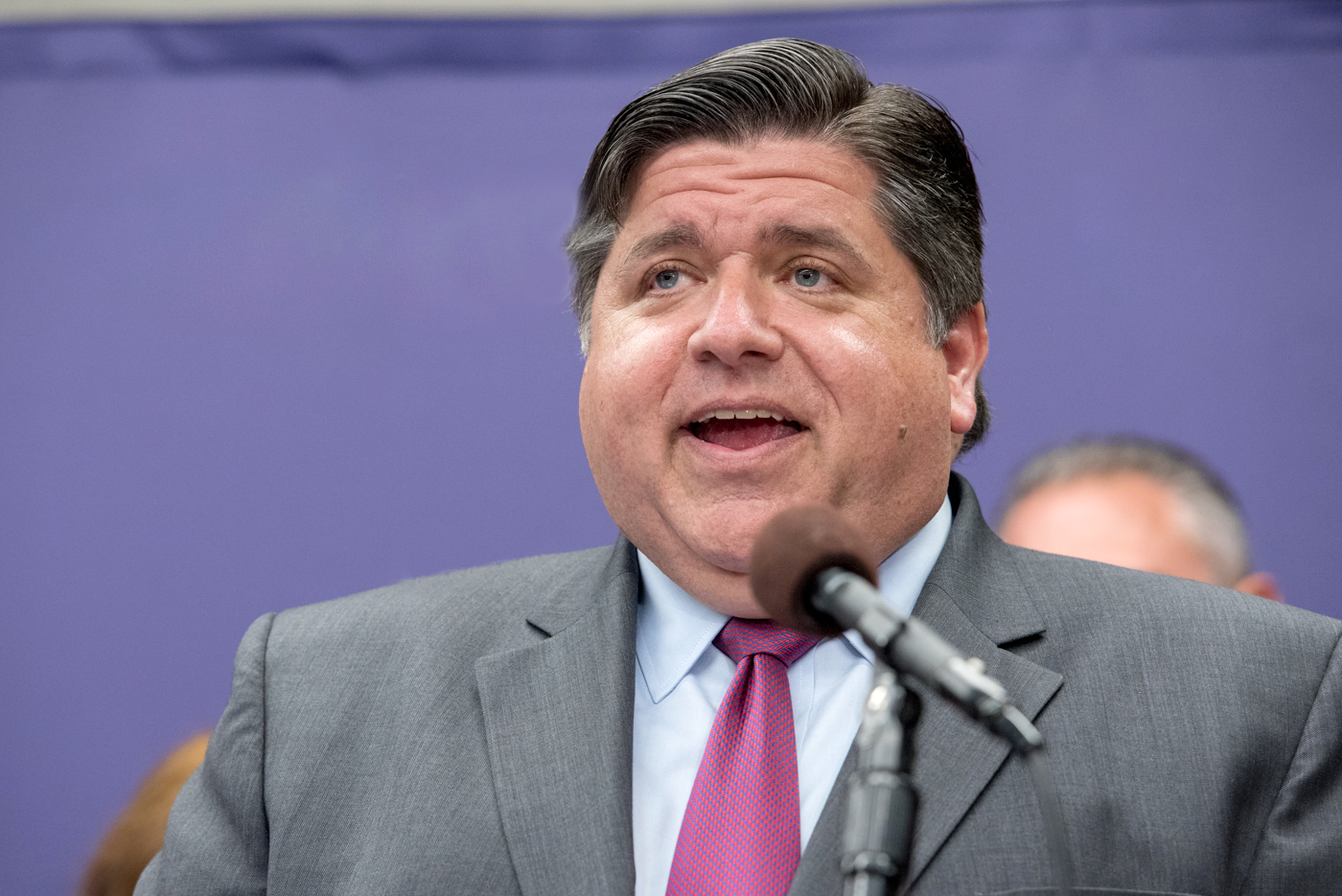
Will Governor Pritzker cave to the CTU and spurn hundreds of millions of dollars in federal school vouchers that will help Chicago’s middle- and lower-income families with their children's education?
Governor JB Pritzker is once again searching for excuses to do the bidding of the Chicago Teachers Union (CTU) by refusing to approve Illinois’ participation in the new federal tax credit scholarship program. By some estimates, the Educational Choice for Children Act could provide up to $900 million in funding directly to parents of both private and public school children. The concerns Pritzker has voiced are pure hogwash — scripted by a union that would deny public school families hundreds of millions of dollars in additional support if it means even a dime goes to private school parents.
Pritzker claims the program diverts funding from public education, supports private schools with less accountability, and could potentially fund institutions with discriminatory policies. The governor also says he is evaluating the program’s impact on public school budgets, with a decision still pending. These claims however are completely unfounded and constitute teacher union talking points that generally accompany any proposal to privilege funding for private school tuition support.
This is a 100 percent federal tax credit program that would provide hundreds of millions of dollars to families, including those with children in public schools. Concerns about transparency, civil rights, or oversight ignore the fact that private schools already receive federal IDEA funding and are subject to rigorous accountability standards as a condition of receiving those funds.
Fears that the program could fund schools promoting discriminatory, racist, anti-American, or anti-Semitic views also fall flat. Nothing prevents the state from establishing clear guidelines to guard against such outcomes. As for Pritzker’s skepticism about whether the program fully benefits students — what exactly is complicated about a scholarship that places hundreds of millions of dollars directly into the hands of parents, including those who choose to homeschool?
History appears to be repeating itself. When the state’s "Invest in Kids" private school scholarship program came up for renewal, Pritzker ultimately aligned with teachers unions and allowed it to sunset. That decision stripped nearly 10,000 low-income families — many in Chicago — of scholarships. That program had cost the state less than 0.5 percent of its annual K–12 budget, but provided a lifeline to struggling families shut out of quality public options.
Research from the Illinois State Board of Education in 2024 showed “Invest in Kids” scholarship students made the largest year-over-year learning gains statewide. Most came from households earning under $49,000 annually and outperformed their low-income peers in public schools in reading and math. If Catholic schools were treated as a single state on the National Assessment of Educational Progress (NAEP), they would rank as the highest-performing in the nation.
There is no better example of contempt shown to Chicago families than the tale of two schools. Located in East Garfield Park, Hope Academy enrolls 299 students in grades 9–12 and receives five applications for every available freshman seat. Impressively, 90 percent of its graduates go on to attend a four-year college. The school ranks 6th out of 58 Christian high schools in Illinois, 25th out of 166 private schools in diversity, and is in the top 20 percent of all high schools statewide — a remarkable achievement given its location and the demographics it serves.
By contrast, a mile away sits Manley High School. A building with a capacity for 1,176 students, Manley has a mere 78 students. A similar demographic. The school has a staff of 26, a staff-to-student ratio of 5:1. Despite this only three percent of students meet state standards in English Language Arts, zero percent in math, and four percent in science. Yet that failing near empty school remains open. The CTU’s success in killing the state’s “Invest in Kids” private school scholarship program cost 138 Hope High School students their scholarship.
One might think the consistent criticism directed at Pritzker by CTU leadership would prompt him to break from the union. While Pritzker was under consideration to be Kamala Harris’ running mate in the 2024 presidential election, CTU President Stacy Davis Gates accused him of “denying funding for Black, brown, working-class, and immigrant kids” and failing a “test of values.” Since then, she and CTU Vice President Jackson Potter have continued attacking Pritzker, calling him a “white billionaire governor who is out of touch with urban, working-class needs.”
Despite these attacks, Pritzker has remained largely aligned with the CTU’s agenda, with the lone exception of not providing an additional $1.6 billion in funding the union claims is owed under its “adequacy” framework — an approach that would require nearly $7 billion more in statewide education funding. With Illinois facing a projected deficit exceeding $3 billion and Pritzker’s own national political ambitions, such increases are unlikely.
Pritzker also significantly empowered the CTU by signing HB 2275 in April 2021, which repealed Section 4.5 of the Illinois Educational Labor Relations Act. This change allowed the union to strike over a broad range of issues, not just wages. Combined with Amendment 1 — the “Workers’ Rights Amendment” — the CTU now has broader bargaining authority than most public-sector unions nationwide, enabling it to use negotiations as a platform for wider policy advocacy.
The Educational Choice for Children Act is a gift horse. It would place hundreds of millions of dollars into the hands of parents, empowering them to determine the best way to support their children’s education. At least 29 states have opted into the program, including neighboring Indiana, Iowa, and Missouri. Only a handful have opted out, including Wisconsin, where the governor vetoed legislation that would have required participation.
Pritzker owes the CTU nothing. Don’t look a gift horse in the mouth. It’s time to do the right thing.
