Why fighting investment guarantees disinvestment
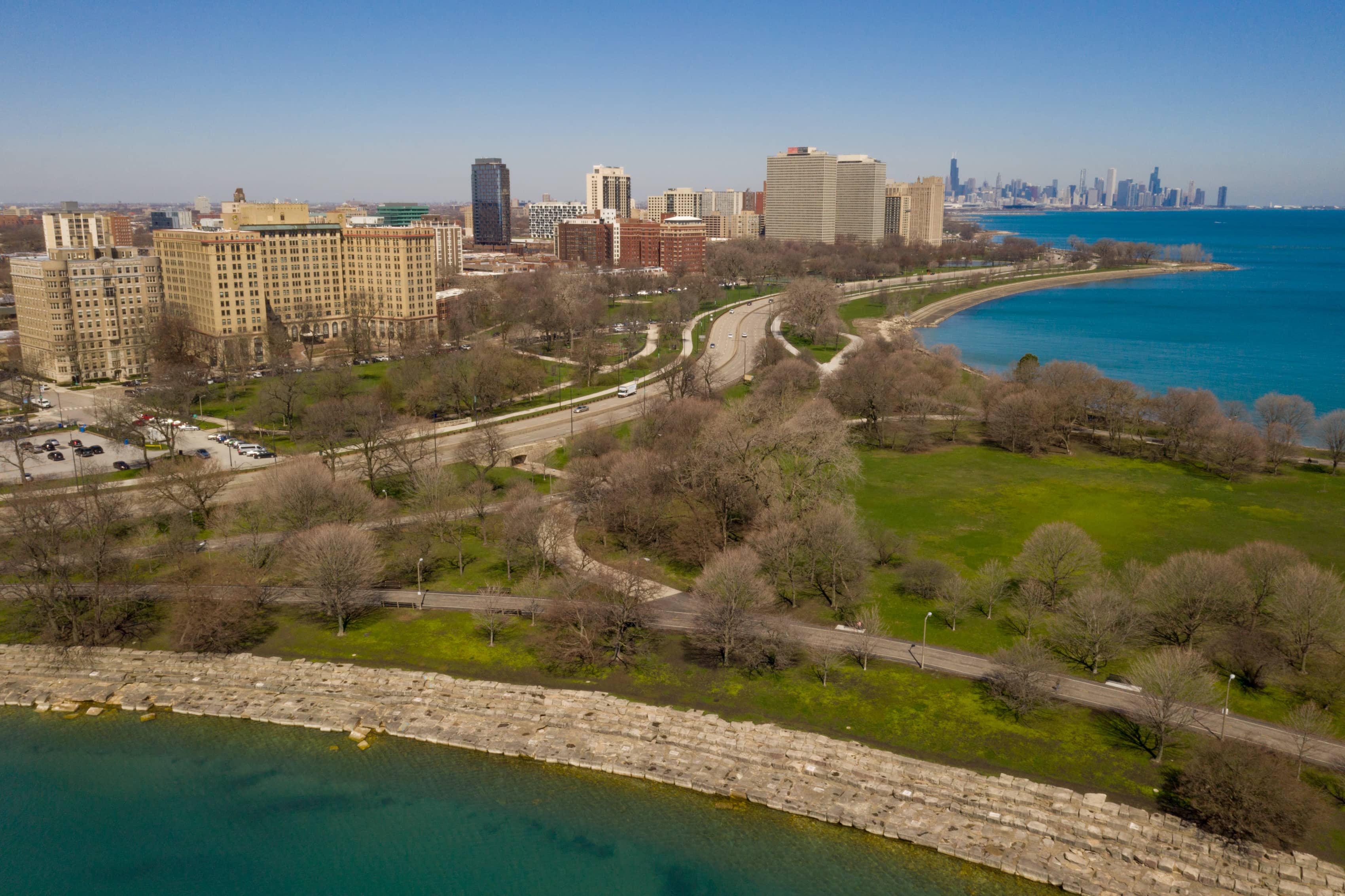
South Shore was not always a cautionary tale. In the 1950s and into the mid-1960s, it was among Chicago’s most stable and attractive neighborhoods — lakefront parks crowded in summer, a strong retail spine, thriving churches and schools, and housing that accommodated both the middle class and the aspirational working class. It was, in many respects, a South Side analog to Lincoln Park before Lincoln Park became unaffordable.
What followed is well known: industrial collapse, population loss, rising crime, deteriorating housing stock, and the steady withdrawal of retail and services. Over time, South Shore acquired labels no neighborhood wants — "food desert," "disinvested," "over-policed," "under-served," "Terrortown." Yet today, when opportunity knocks with one of the largest private-sector redevelopment proposals in Chicago’s modern history, a significant faction of residents and organizers insists the real threat is not stagnation, but revival.
That position is pathetically self-destructive because the economics are not complicated, and the consequences are not abstract.
Disinvestment has consequences — retail leaves first
The Chicago Reader’s recent reporting on opposition to the Quantum Shore Chicago project inadvertently illustrates the core problem facing South Shore and in fact the city itself. Residents describe daily life defined by absence. The nearest full-service grocery store is, for some, three bus rides away. Over the past several decades, at least five grocery stores have disappeared entirely, with others reduced to discount formats that offer limited selection and limited employment. In February 2025, the last walkable Walgreens pharmacy in the area closed — which followed another Walgreens closure just months earlier.
These are not policy failures in isolation. They are market outcomes.
Retailers — particularly pharmacies and grocers — are highly sensitive to foot traffic, household income, and population stability as well as crime. When neighborhoods lose residents, or when remaining residents have limited disposable income, stores leave. They do not leave because of ideology or malice. They leave because the numbers no longer work.
It is therefore incoherent to lament the disappearance of essential retail while opposing the very forms of investment that rebuild the customer base those retailers require.
The Quantum Shore Project: What it is — and what it is not
Quantum Shore Chicago is a planned redevelopment of the former U.S. Steel South Works site, a 440-acre industrial brownfield that has sat largely dormant since 1992. The project includes the Illinois Quantum and Microelectronics Park, anchored by PsiQuantum, alongside advanced manufacturing, research facilities, housing, and a replacement hospital for Advocate Trinity. The first phase alone represents roughly $9 billion in investment, with significant public participation.
Opponents frame the project as external capital exploiting a vulnerable community, capturing subsidies, and leaving residents worse off, thus falsely characterizing the equivalent of manna from heaven — large-scale investment — as inherently extractive — while offering no viable alternative other than the chimera of redistribution or the dismal status quo.
The referendum fight
Local organizers, particularly Southside Together and allied groups, initiated a non-binding referendum, seeking to place a question on the March ballot in selected precincts asking whether the development should be halted in favor of resident-controlled alternatives such as grocery stores, affordable housing, and youth centers. This is the same crowd that fought the Obama Center and helped kill the Tiger Woods golf course project.
Fortunately, the referendum was ultimately rejected by election officials on technical grounds, specifically for combining multiple questions in violation of state law. Following that decision, organizers did not retreat; they intensified their opposition, arguing that residents lacked meaningful democratic access to decisions affecting their neighborhood.
Gentrification anxiety vs. economic arithmetic
The central fear animating opposition is displacement — rising property values, higher rents, increased taxes, and the eventual exit of long-time residents.
But fear does not substitute for analysis.
Chicago’s property-tax system does not reward stagnation. When commercial property values decline — as they have downtown and elsewhere — the total levy does not shrink. The burden shifts. Homeowners and renters pay more. The absence of business investment does not freeze taxes; it concentrates them.
Conversely, expanding the commercial and employment tax base disperses the burden. It does not eliminate tax pressure, but it mitigates it. This is not theory; it is arithmetic.
The argument that keeping investment out will keep rents low confuses cause and effect. Rents are low in deeply disinvested areas not because policy has preserved affordability, but because demand has collapsed. The moment a neighborhood begins to stabilize — through jobs, services, safety, and retail — demand returns. The policy question is not whether that happens, but whether residents are positioned to benefit when it does.
Retail does not precede purchasing power
One of the more revealing moments in the Reader’s reporting comes when residents describe what they want instead of the quantum project: grocery stores, pharmacies, and neighborhood services.
That desire is understandable — and economically backwards.
Retail follows purchasing power. It does not create it.
A full-service grocery store or pharmacy requires a threshold population, sufficient household income, predictable foot traffic, and a perception of neighborhood stability and safety. These conditions do not arise spontaneously. They are the result of employment density, daytime population, and capital confidence.
Put bluntly: Walgreens did not leave because South Shore lacked a community vision statement. It left because too few customers could sustain the store.
If the goal is to restore everyday retail, the necessary precondition is economic gravity — jobs, workers, and residents with money to spend. Large employers create that gravity. So do hospitals, research facilities, and ancillary businesses. Opposition that succeeds in blocking these anchors ensures the retail desert remains permanent.
Jobs, skills, and time horizons
Critics also correctly point out many of the permanent jobs associated with quantum computing require advanced degrees and specialized training. This is true. It is also incomplete.
First, the campus promises construction jobs, facilities management, security, logistics, administration, and healthcare employment tied to the hospital component. Second, long-term workforce pipelines are already being discussed with City Colleges and local schools.
No serious economic transition is instantaneous. South Shore did not lose its industrial base overnight; it eroded over decades. Rebuilding human capital takes time as well. Rejecting a project because today’s workforce is not yet prepared for tomorrow’s jobs ensures that tomorrow never arrives.
Environmental risk and the status quo bias
Environmental concerns about the South Works site are real. The land is contaminated; remediation must be rigorous; oversight must be continuous. But here again, the comparison that matters is not between ideal redevelopment and imperfect redevelopment — it is between redevelopment and continued decay.
A brownfield left untouched does not heal itself. It continues to pose a risk without generating benefit. A structured redevelopment, subject to modern remediation standards and ongoing monitoring, at least offers the possibility of improvement.
The cost of saying no
South Shore and nearby communities have, over the past several decades, learned to distrust promises. But skepticism, when elevated into a governing philosophy, becomes paralysis.
A neighborhood that rejects investment because it might change cannot then be surprised when nothing improves. The population continues to fall. Retail continues to withdraw. Public services degrade further. And residents remain trapped in a cycle where the absence of opportunity is mistaken for protection. Nobody wins. Everybody loses.
Keeping the rent low by keeping the neighborhood poor and crime high is not housing policy. It is managed decline.
A different frame
The proper question is not whether Quantum Shore Chicago is flawless. It is whether South Shore, and the city, can afford another generation of decline and fall.
With competent leadership — city, county, and state — investment can be paired with enforceable local hiring, tenant protections, and infrastructure commitments. That requires negotiation, not negation. It requires engagement, not vetoes.
If the aim is stability, dignity, and access to basic services, the path does not run through permanent disinvestment. It runs through growth managed intelligently, benefits captured deliberately, and fear replaced with arithmetic.
It is axiomatic that South Shore and other “disinvested” communities need investment. It does not need to be protected from the future. It needs to be included in it. Chicago needs leaders who can educate and lead residents who are opposing development out of fear rather than hope and ambition.
